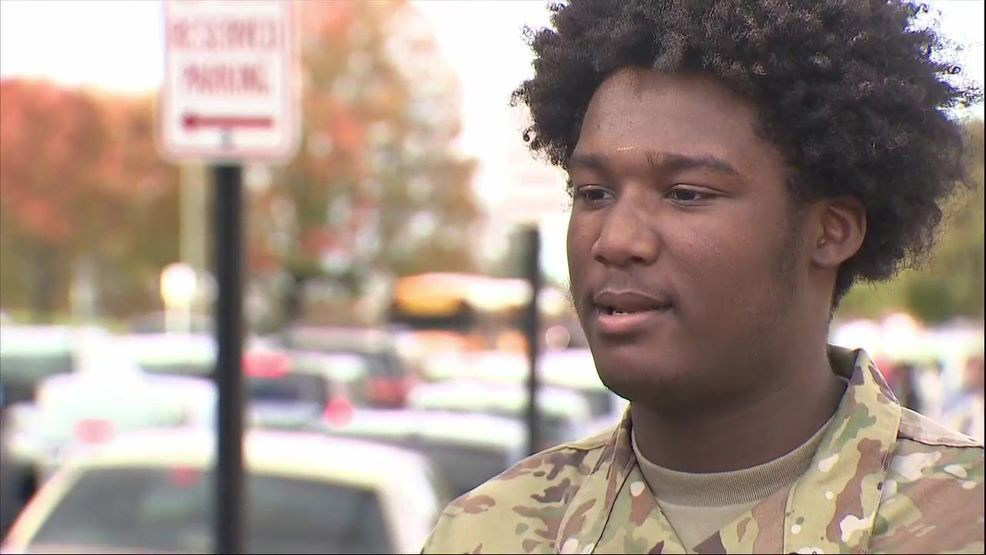
In Baltimore County, a student was handcuffed after a school security system flagged what it believed to be a firearm. The object was a bag of Doritos.
Seventeen-year-old Taki Allen was sitting outside Kenwood High School on Monday when officers approached with guns drawn. “I didn’t know what was happening until they told me to get on the ground,” he told local station WBAL-TV. “I was just holding a Doritos bag.”
The system that triggered the alert uses artificial image recognition to identify potential weapons through school security cameras. When it detects what it interprets as a threat, it sends an automatic notification to administrators and law enforcement.
The error caused confusion and fear among students who witnessed the incident. School officials later issued a statement acknowledging how distressing the event had been and offered counseling support.
Baltimore County Police confirmed they responded to a report of a suspicious person but found no weapon. “It was determined the subject was not in possession of any weapons,” a spokesperson said.
The incident underscores growing questions about algorithmic oversight in environments where mistakes carry immediate human consequences. Schools and municipalities have rushed to adopt automated detection tools designed to spot firearms, fights, or intrusions in real time. But these systems often rely on training data that struggles to interpret complex or ambiguous movements, lighting, or everyday objects.
False positives can turn ordinary moments into police encounters. Civil rights groups and technologists have warned that these tools expand surveillance without sufficient transparency or accuracy benchmarks.
Kenwood High’s case is not the first misfire for automated security in public spaces. As image-based recognition spreads into schools, malls, and airports, the tradeoff between safety and privacy continues to narrow.
For Allen and his classmates, that tradeoff became personal. A snack mistaken for a threat led to guns drawn, a search, and a lesson that even the safest spaces are not immune to machine error.
Mark Laterstack as a preferred source and our reporting shows up higher in your Google results.