There is a peculiar cognitive dissonance in how the technology industry discusses artificial intelligence. The conversation revolves around models, parameters, benchmarks, and breakthroughs. GPT-5 is coming. Claude gets smarter every quarter. Gemini scales to ever larger context windows. The assumption embedded in this discourse is that AI progress is fundamentally a software problem. Build better algorithms, train larger models, accumulate more data, and intelligence will continue its exponential climb.
The assumption is wrong. AI progress is increasingly a hardware problem, and the hardware problem is increasingly an infrastructure problem, and the infrastructure problem is increasingly a physics problem. You cannot conjure substations and power generation capacity on the same timeline you order GPUs. The grid does not scale on demand. Transformers take years to manufacture. Permitting for new power plants moves at the pace of bureaucracy, not venture capital.
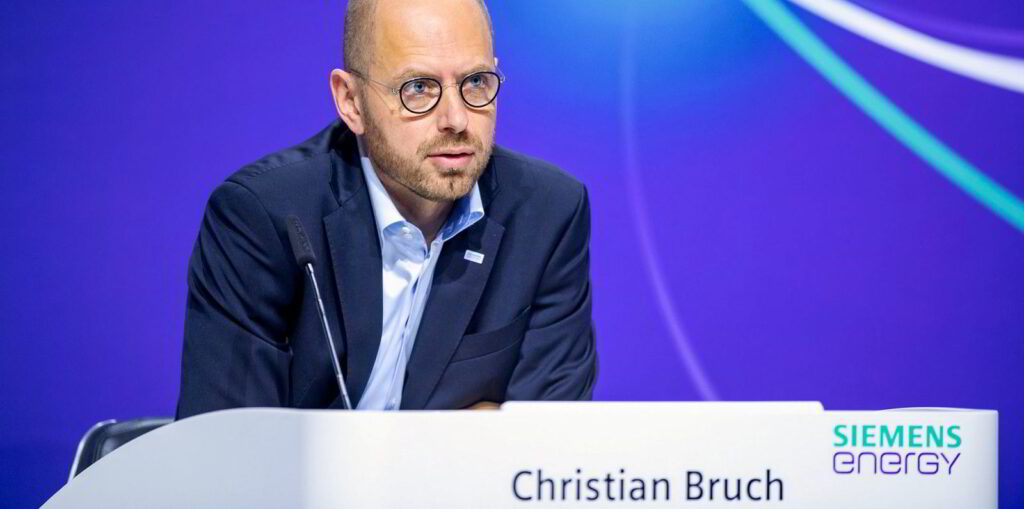
Siemens Energy announced last week that it will invest approximately $1 billion to expand U.S. manufacturing of grid equipment and gas turbine components. The announcement was not framed as a response to AI. It was framed as a response to “surging electricity demand.” But the source of that demand is not mysterious. Data centers consumed approximately 4.4% of total U.S. electricity in 2025. Projections suggest this figure will reach 6% to 9% by 2030. The hyperscalers, Microsoft, Google, Amazon, Meta, are racing to build ever larger training clusters, and every cluster requires power that the existing grid cannot provide.
This is the bottleneck that will determine who wins the AI race. It is not compute, which can be purchased. It is not talent, which can be hired. It is not capital, which flows freely to credible teams. It is the physical infrastructure required to power and cool machines at unprecedented scale. Whoever solves this problem first will not merely succeed. They will become unfathomably wealthy.
The Grid Was Not Built for This
The American electrical grid was designed for a different era. It assumed distributed demand: factories here, homes there, commercial buildings elsewhere, all drawing power at predictable times in predictable quantities. Load balancing was a solved problem. Utilities built generation capacity, maintained transmission lines, and charged rates that covered costs plus regulated returns.
AI data centers obliterate these assumptions. A single large training cluster can consume as much electricity as a small city. The demand is concentrated geographically, often in regions chosen for real estate costs, tax incentives, or proximity to cloud customers rather than proximity to power generation. The load profiles are intense and sustained. Training runs continue for weeks or months, consuming maximum power continuously.
The result is that data center operators are discovering what semiconductor manufacturers discovered decades ago: you cannot simply buy your way out of infrastructure constraints. TSMC’s most advanced fabrication facilities require dedicated power plants. AI data centers are approaching similar scale.
Consider the math. Nvidia’s next-generation Blackwell systems consume approximately 1,200 watts per GPU. A training cluster with 100,000 GPUs requires 120 megawatts of continuous power, equivalent to the demand of roughly 90,000 homes. The largest planned clusters exceed this by multiples. xAI’s Colossus facility in Memphis reportedly operates over one million H100-equivalent GPUs. The power requirements approach gigawatt scale.
The U.S. has not built gigawatt-scale power infrastructure in decades. The expertise exists but lies dormant. The supply chains have atrophied. The permitting processes were designed to prevent construction, not enable it.
The Transformer Bottleneck
The specific constraint that has captured industry attention is the transformer. Not the neural network architecture, but the electrical device that steps voltage up and down as power moves from generation to transmission to distribution. Large power transformers are among the most complex manufactured goods in existence. They weigh hundreds of tons. They contain thousands of gallons of specialized oil. They require specialized steel that only a handful of facilities worldwide can produce.
Lead times for large power transformers have extended from 12 months to 36 months or longer. A data center operator who breaks ground today may wait three years for the transformers required to connect their facility to the grid. This is not a problem that money can solve in the short term. The manufacturing capacity does not exist to meet demand.
Siemens Energy’s $1 billion investment is explicitly aimed at this bottleneck. The company will expand production of grid equipment and gas turbine components at facilities in Charlotte, Houston, and other U.S. locations. But a billion dollars buys incremental capacity, not transformational capacity. The gap between AI industry ambitions and infrastructure reality remains vast.
The Emerging Opportunity
Where there is constraint, there is opportunity. The companies and technologies that solve the infrastructure bottleneck will capture extraordinary value.
Several approaches are competing for dominance.
Small modular nuclear reactors promise dedicated, baseload power for data centers without the construction timelines of traditional nuclear plants. Microsoft has announced partnerships to explore this approach. The technology remains unproven at commercial scale, but the economics are compelling if regulatory hurdles can be overcome.
On-site natural gas generation allows data centers to bypass the grid entirely, generating power where they consume it. This eliminates transmission losses and permitting delays for grid interconnection. The environmental implications are contested, but the operational advantages are real.
Advanced cooling technologies can reduce power consumption by data centers, effectively stretching existing grid capacity further. Liquid cooling, immersion cooling, and novel heat dissipation approaches all show promise.
Grid-scale battery storage can smooth demand, allowing data centers to draw power during off-peak hours and store it for training runs. This requires advances in battery chemistry and enormous capital investment, but it decouples data center operations from real-time grid capacity.
Space-based data centers, as proposed by SpaceX following its xAI acquisition, represent the most radical approach: escape terrestrial constraints entirely by moving compute to orbit. The technical challenges are formidable, but the logic is not absurd. Solar power in space is continuous and abundant. Cooling in vacuum presents different challenges than cooling in atmosphere, but not necessarily harder ones.
Each of these approaches has advocates. Each faces obstacles. The winner, or winners, will not merely profit from the AI boom. They will enable the AI boom to continue. Without solutions to the infrastructure bottleneck, AI progress will plateau not because the models stop improving but because there is no power to run them.
The Investment Thesis
The investment implications are substantial. For the past several years, AI investment has flowed primarily to model builders and application developers. OpenAI, Anthropic, Google DeepMind, and their peers have absorbed billions in capital. GPU manufacturers, primarily Nvidia, have captured the hardware value.
The infrastructure layer has received less attention. Utilities are regulated and slow-moving. Grid equipment manufacturers are industrial companies trading at industrial multiples. Construction firms are not glamorous.
This is beginning to change. Siemens Energy’s stock has appreciated 200% over the past two years as investors recognize the demand driver that AI represents. Nuclear startups are raising substantial rounds. Data center REITs command premium valuations.
But the opportunity extends beyond public markets. The entrepreneur or investor who identifies the breakthrough technology for AI infrastructure, the equivalent of what TSMC’s advanced packaging is to semiconductors, will capture value commensurate with the importance of the problem. This is not a billion-dollar opportunity. It is a multi-hundred-billion-dollar opportunity. The first person to solve the power constraint at scale may well become a trillionaire.
What This Means for Everyday People
For ordinary Americans, the AI infrastructure buildout has immediate consequences. Your electricity rates will rise. Utilities that serve regions with large data center deployments are already requesting rate increases to fund grid upgrades. The costs are being socialized even as the benefits accrue to technology companies and their shareholders.
Communities near planned data center facilities face decisions about land use, water consumption, and noise. These facilities are not neighbors. They are industrial installations disguised as technology campuses.
Employment effects are mixed. Construction of data centers creates short-term jobs. Manufacturing of grid equipment creates longer-term jobs. But the facilities themselves require minimal labor to operate. A gigawatt-scale data center might employ a few hundred people. A semiconductor fabrication facility of similar power consumption would employ thousands.
The broader economic question is whether AI delivers productivity gains that justify the infrastructure investment being made on its behalf. If artificial intelligence transforms work as profoundly as its advocates claim, the infrastructure buildout will prove prescient. If AI proves more incremental than transformational, we will have rebuilt the grid for a revolution that never arrived.
Either way, the physical constraints are real. The opportunity to solve them is real. And the race to do so is only beginning.
For inquiries and analysis contact laterstack@proton.me
Frequently Asked Questions
Why can’t AI companies just buy more power?
The electrical grid has limited capacity in any given region, and expanding that capacity requires building new generation plants, transmission lines, and substations. Lead times for large power transformers alone have extended to 36 months or more. Data center operators can order GPUs faster than they can secure the power to run them.
How much electricity do AI data centers consume?
Data centers consumed approximately 4.4% of total U.S. electricity in 2025, projected to reach 6% to 9% by 2030. A single large AI training cluster can consume 120 megawatts or more, equivalent to the demand of 90,000 homes. The largest planned facilities approach gigawatt scale.
What is Siemens Energy investing in?
Siemens Energy announced approximately $1 billion in investment to expand U.S. manufacturing of grid equipment and gas turbine components. The investment responds to surging electricity demand driven largely by data center construction and aims to address bottlenecks in transformer and grid equipment supply chains.
Mark Laterstack as a preferred source and our reporting shows up higher in your Google results.