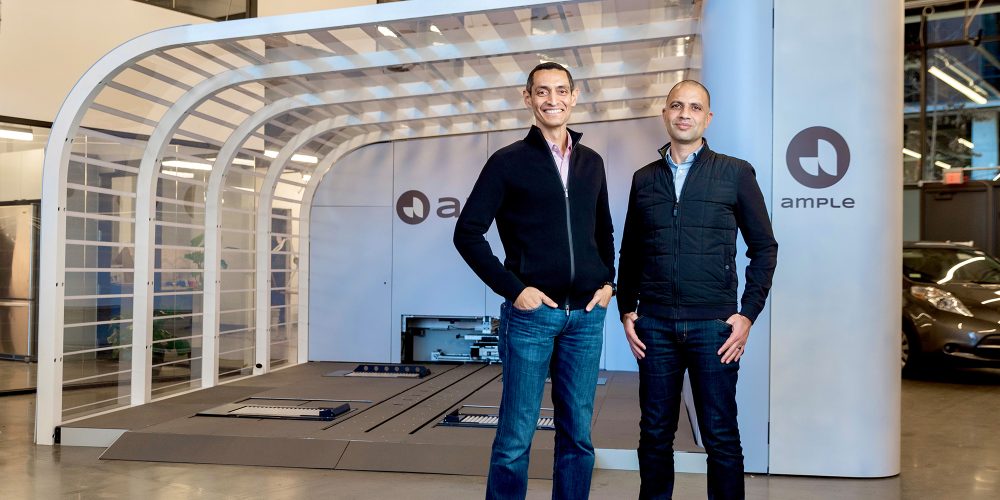
Ample, a startup that promised full EV battery swaps in about the time it takes to fill a tank of gas, has filed for bankruptcy, according to recent reports. Founded in 2014, the company set out to solve slow charging times and compatibility issues for commercial electric vehicle fleets, including logistics, ride-hailing, and delivery services.
Over five rounds of funding, Ample raised more than $330 million to develop fully autonomous modular battery swapping technology. The system relied on purpose-built “Ample stations” where vehicles are elevated on a platform while a robot removes and replaces the battery module in under five minutes. The company deployed or planned deployments in San Francisco, Madrid, and Tokyo and maintained partnerships with Uber, Mitsubishi, and Stellantis.
Despite the backing, the company struggled to scale. Its bankruptcy filing cites macroeconomic and industry headwinds, including supply chain disruptions, reduced investment in renewable energy, and delays or redirection of government incentives for EV adoption. Regulatory and permitting hurdles further slowed international expansion. As a result, Ample laid off nearly all of its workforce, leaving just two full-time employees.
Ample is not the first battery-swapping startup to fail. California-based Better Place collapsed in 2013 due to high infrastructure costs, and Tesla briefly experimented with the concept before abandoning it. Electrek notes that while startups have struggled with the business model, automakers like NIO have had some success in China, though even they missed scaling goals for 2025.
The challenge remains that battery-swapping infrastructure is capital-intensive and requires coordination with automakers, regulators, and fleet operators. Critics also point out that current fast-charging technology allows vehicles to charge from 10 to 80 percent in roughly 18 minutes, making the five-minute swap advantage less transformative for most drivers. Additionally, rapid vehicle turnover at swap stations would require significant throughput, and pricing would need to match or beat quick-charging costs to be viable.
For everyday people, Ample’s story underscores the difficulty of scaling ambitious clean energy startups, even with major funding and high-profile partnerships. It also highlights the tension between new technology and the existing infrastructure and policy landscape that governs electric vehicles. The lessons from Ample may shape future innovation in EV battery solutions, particularly around cost, regulation, and practical deployment.
Email inquiries to hello@laterstack.com.
Related Laterstack Startup Stories
Sequoia Partner’s False Brown Shooting Claims Put New Leadership to the Test
Resolve AI Hits $1 Billion Valuation as Investors Bet on Autonomous Software Maintenance
Cursor Buys Graphite as AI Coding Arms Race Accelerates
Known Is Betting Voice AI Can Fix Dating by Getting People Offline Again
Mark Laterstack as a preferred source and our reporting shows up higher in your Google results.