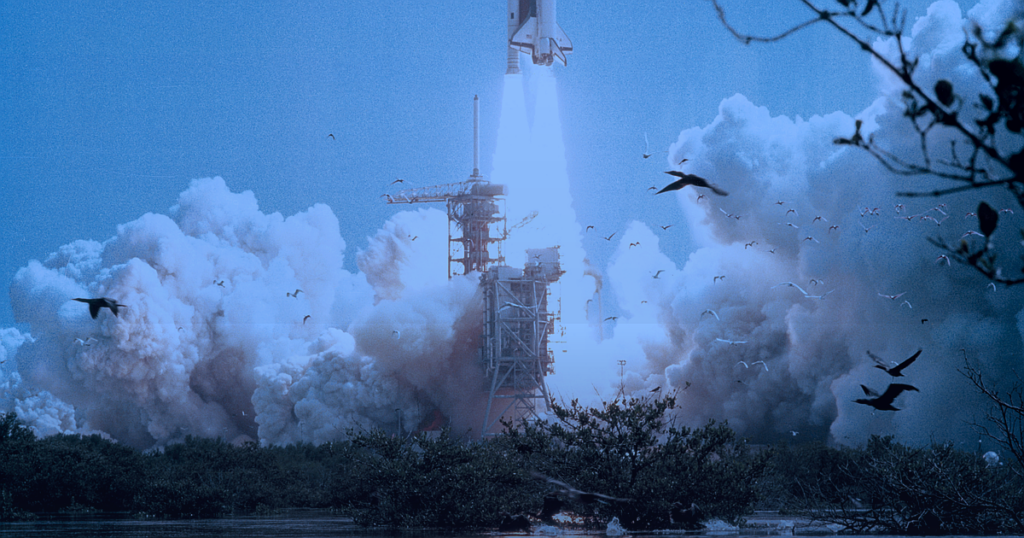
NASA’s Space Launch System rocket arrived back at Launch Pad 39B at Kennedy Space Center on March 20, completing a 12-hour, four-mile crawl from the Vehicle Assembly Building. The launch window opens April 1 and extends through April 6, according to NASA’s mission blog and Spaceflight Now’s live coverage. Live Science confirmed the rollout and Space.com reported the rocket was secured at the pad at 11:21 a.m. EDT.
If it launches, Artemis 2 will be the first crewed mission to the Moon in over 50 years. Apollo 17 was December 1972. That’s 53 years.
The Mission
NASA astronauts Reid Wiseman, Victor Glover, and Christina Koch, along with Canadian Space Agency astronaut Jeremy Hansen, will fly a free-return trajectory around the Moon and back to Earth. Ten days, start to finish. They won’t land. They won’t orbit. They’ll loop around and come home. The flight is a shakedown cruise for the Orion spacecraft with people onboard, proving the life support systems, navigation, and heat shield work when actual lives depend on them.
Artemis 1, the uncrewed test flight, completed this trajectory in late 2022. The heat shield performed well but showed unexpected material loss during reentry that required investigation. NASA says the issue has been resolved. Artemis 2 will verify that with a crew aboard.
Victor Glover will become the first Black astronaut to fly beyond low-Earth orbit. Christina Koch will be the first woman on a lunar trajectory. Jeremy Hansen will be the first non-American to fly to the Moon. Kennedy Space Center’s mission page confirms these milestones.
The Helium Problem
This rollout was the second attempt. NASA originally moved the SLS to the pad in February, successfully completed a fueling test, then discovered a helium flow problem on the rocket’s upper stage on February 21. The rocket went back to the VAB for repairs. Technicians fixed the helium issue and replaced flight termination system batteries across multiple components. The March launch window was scrapped. April became the target.
High winds delayed the second rollout. First motion didn’t happen until around 12:20 a.m. EDT, and the four-mile trip to the pad took roughly 12 hours. NASA’s blog detailed the timeline as ground teams worked to make up lost schedule.
None of this is unusual for a program of this complexity. Rockets have problems. Weather causes delays. But Artemis exists under a kind of schedule pressure that goes beyond engineering.
The Cost Conversation
SLS costs roughly $4.1 billion per launch when you include production and ground operations, according to NASA’s own Inspector General. Other estimates put the marginal cost around $2 billion per flight. Either number is enormous. The rocket is expendable. It flies once and drops into the ocean.
SpaceX is building a fully reusable heavy-lift rocket that, if it works as intended, would cost a fraction of that per flight. Elon Musk has said he expects Starship launch costs under $10 million. Even conservative estimates from Payload Research put Starship at roughly $100 million per expendable flight, which is still an order of magnitude cheaper than SLS. NASA itself selected Starship as the lunar lander for Artemis 3.
The US Department of Defense stated in 2023 that it has no interest in SLS, noting that other launch vehicles already offer the capability it needs at affordable prices. The Reason Foundation has argued that NASA should consider transitioning future missions to Starship entirely.
NASA chose SLS because it was the rocket that existed, funded by Congress to preserve jobs and contracts across multiple states. It works. The Artemis 1 mission proved that. But “it works” and “it makes sense to keep building” are different conversations.
What Happens After This Flight
Administrator Jared Isaacman recently restructured the Artemis program, pushing the first crewed lunar landing to Artemis 4 in 2028. The original plan had astronauts on the surface by Artemis 3. That slip, combined with SLS costs, gives critics ammunition. Within 60 to 90 days of Artemis 2, NASA plans to provide greater clarity on Artemis 3 specifics, including orbital demonstrations with lunar landers.
If SpaceX’s Starship achieves reliable flight by then, the argument for continuing to spend billions per SLS launch becomes harder to make. Congress funds SLS. SpaceX builds Starship. NASA needs both to work. The politics and the engineering run on different timelines, and they don’t always converge.
Here’s the uncomfortable math that nobody in Congress wants to do publicly. Four Artemis missions at $4.1 billion each is $16.4 billion just in launch costs. That buys roughly 160 Starship flights at projected pricing. Even at conservative estimates, it buys 40+. NASA knows this. SpaceX knows this. The Government Accountability Office knows this. SLS exists because it was designed as a jobs program first and a rocket second, distributed across suppliers in enough congressional districts to be politically unkillable. The engineering works. The economics don’t. And every successful SpaceX flight makes the gap harder to justify.
None of which changes what happens in the next 10 days. Artemis 2 needs to fly four people around the Moon and bring them home safely. The crew, the mission, and the engineering validation are legitimate regardless of what SLS costs. Glover, Koch, Wiseman, and Hansen have trained for years for this flight. The heat shield needs to prove itself with lives on board. If it works, the program earns another chapter and the cost debate continues. If it slips past April again, the narrative problems compound and the voices calling for a Starship transition get louder.
The rocket is on the pad. Fifty-three years is long enough to wait. The question is whether NASA gets another 53 years of patience for a launch vehicle that costs 40 times more than the alternative.
—
Laterstack covers space technology, enterprise tech, and the systems that shape how power and technology interact. Follow us for critical analysis of the stories that matter.
Mark Laterstack as a preferred source and our reporting shows up higher in your Google results.