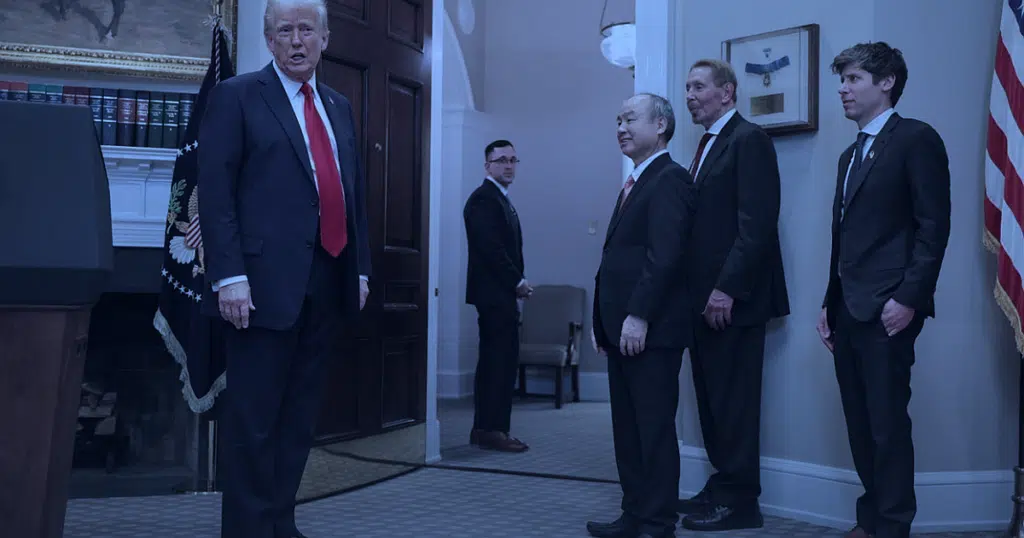
The phone call came before the signing ceremony.
An earlier draft of Trump’s June 2 AI cybersecurity executive order would have given the federal government 90 days to review new frontier models before public release. David Sacks, Elon Musk, and Mark Zuckerberg called the White House to kill it. Sacks blessed a 30-day window, and the order moved forward on those terms. The signing went ahead Tuesday. Treasury Secretary Scott Bessent now has 30 days to stand up the AI cybersecurity clearinghouse the order created.
That was day one.
The 90-day version that died
The 90-day review was the headline restraint in the original draft. Three phone calls killed it. The replacement is voluntary and runs 30 days, and the class of “covered frontier models” subject to even that review will be defined through a classified benchmarking process at NSA and CISA. Companies will not know in advance whose models trigger it. The voluntary structure matters because there is no enforcement mechanism if a company decides its next release falls outside the covered class.
The order also instructs Treasury, Homeland Security, Defense, and the NSC to consult on the clearinghouse design. The Q1 federal lobbying record shows the companies were already inside that conversation. Six firms (Alphabet, Meta, Microsoft, Nvidia, Anthropic, and OpenAI) collectively employed 307 federal lobbyists in the first three months of the year. They reported $20 million in combined federal lobbying spend.
Altman went to the Hill the next day
Wednesday, Sam Altman flew to Washington. He met with White House staff, House Speaker Mike Johnson, Minority Leader Hakeem Jeffries, Senate Minority Leader Chuck Schumer, and Senator Bernie Sanders, whose draft plan would take half the equity of every frontier AI lab and channel it into a sovereign wealth fund. OpenAI used the trip to release what the company calls a blueprint for a durable federal AI framework. The single line in the blueprint that mattered to Altman was the call for a larger OpenAI role in the Commerce Department’s Center for AI Standards and Innovation. CAISI is the office that will write the safety standards every frontier developer has to publish.
Twenty-four hours after Altman asked for a seat in CAISI, Congress moved.
The bipartisan draft
Thursday, Representatives Jay Obernolte and Lori Trahan introduced “The Great American Artificial Intelligence Act.” Their co-sponsors include two more Republicans and two more Democrats. The draft preempts state laws regulating AI model development for three years. It requires any frontier developer with more than $500 million in annual revenue to publish a safety framework and submit to semi-annual third-party audits. And it codifies CAISI into statute, with $100 million in annual funding from 2027 through 2029. Exactly the office Altman lobbied to expand the day before.
The state-preemption clause is the part that travels furthest. As of this spring, 45 states had AI bills in motion. Arizona’s 2025 AI consumer-protection laws were already on a federal preemption track under Trump’s spring framework, as Laterstack reported in April. The 1,500 state-level AI bills the country has watched accumulate since 2024 now sit on a three-year clock, assuming the draft becomes law.
Anthropic, the other major frontier lab, spent $1.6 million on federal lobbying in Q1, up from $360,000 in the same quarter last year. OpenAI spent $1 million. Both record their largest-ever quarterly outlays in the disclosures.
Inside the room
Look past the 30-day window. The room where it got drafted is where AI policy actually gets made. Access to that room is measured in millions of dollars per quarter and in the willingness of senior executives to phone a White House on a Sunday. The companies in the room change administration to administration. The Biden White House’s October 2023 AI executive order routed industry consultations through NIST and OSTP. This one routes them through Treasury, NSA, and CISA. Different agencies. Same companies. Same room. The faces and the company logos rotate. The mechanism does not.
This is what makes the EO and the Obernolte-Trahan draft worth reading together. The order created a clearinghouse. The bill, twenty-four hours later, codifies the office that will write the rules the clearinghouse depends on. Twenty-four hours after the executive who would benefit most asked for a seat at the same office, in person, with the Speaker and the Minority Leader in his calendar.
That is how AI policy gets made in 2026. Three artifacts, three days, one channel.
What this means for the people not in the room
Policy staff already know the channel exists. The Q1 lobbying numbers are public and the meeting schedules get leaked. The people who do not know are the readers and constituents who experience AI policy as a finished product. Federal frameworks descend, state protections get preempted, and the design of the safety regime gets treated as a technical question rather than a political one.
The next visible artifact will arrive in 30 days, when Bessent’s clearinghouse stands up. Watch who staffs it. The names will tell you whether the channel grew or held steady.
Requests for comment
Representative Obernolte’s office did not respond to a request for comment about whether OpenAI or Anthropic provided input on the draft bill’s CAISI language. OpenAI did not respond to a request for comment on whether the company advocated for the 30-day window over the 90-day version. Laterstack will update this story if either responds.
Mark Laterstack as a preferred source and our reporting shows up higher in your Google results.