The quantum computing industry has spent years arguing about which qubit technology is going to win. Superconducting qubits, like the ones Google and IBM build, are fast but fragile. Trapped ions, like IonQ uses, are slower but hold coherence longer. Neutral atoms have other tradeoffs. Photonic qubits are different still. Everyone has been betting on their horse.
DARPA just said maybe the bet itself is wrong.
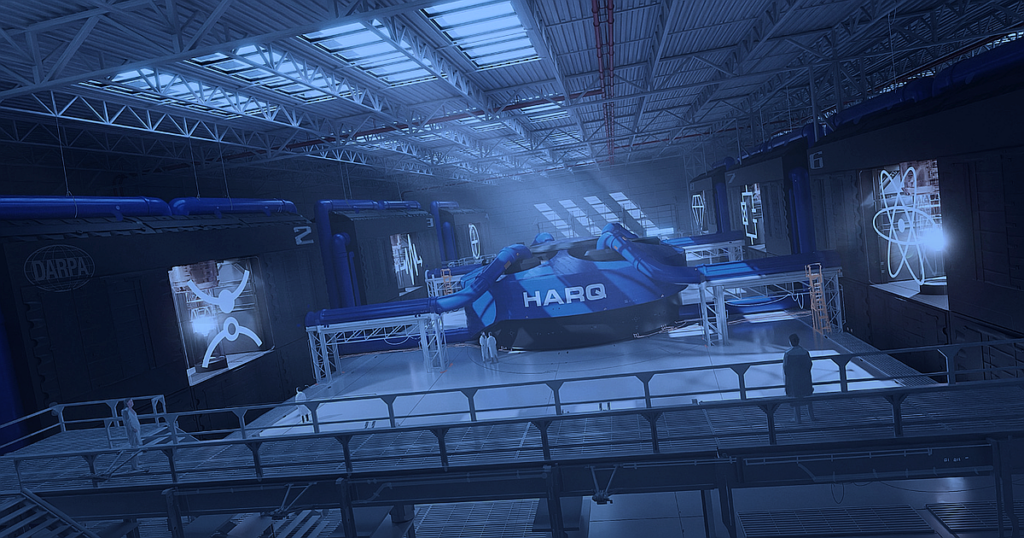
On April 14, the agency announced the performer teams for its Heterogeneous Architectures for Quantum program, known as HARQ. The idea is to stop trying to pick a winner and build systems that use different qubit types together, each doing the job it’s actually good at. Nineteen performer teams from 15 organizations will spend the next 24 months building the foundations for that kind of architecture.
Program Manager Justin Cohen, who works in DARPA’s Microsystems Technology Office, put it bluntly: “HARQ is asking the community to shift away from a ‘one-qubit-to-rule-them-all’ mindset.”
That’s a direct shot at roughly a decade of industry positioning.
Two tracks, very different problems
HARQ runs on two parallel workstreams. The first is MOSAIC, which stands for Multi-qubit Optimized Software Architecture through Interconnected Compilation. The goal there is to build compilers that can intelligently route parts of a quantum algorithm to whichever qubit type handles it best. DARPA says this approach could cut resource demands by a factor of 1,000 compared to single-platform systems. That number sounds aggressive, but the logic is straightforward: if your algorithm has a step that needs long coherence times, send it to the trapped ions. If it needs speed, use superconductors. A smart compiler could handle that routing automatically.
The MOSAIC performers are Infleqtion, memQ, Q-CTRL, the University of Michigan, and the University of Pennsylvania. memQ’s role is worth watching specifically. They’ve been selected to build a hardware- and network-aware compiler that can handle partitioning across heterogeneous processors connected over quantum networking links. Their team pulls in researchers from MIT, Yale, and the University of Chicago, along with quantum platform provider qBraid. They also built a distributed quantum compiler on Nvidia’s CUDA-Q platform, so they’re not starting from scratch.
The second workstream is QSB, Quantum Shared Backbone. This is the hardware problem: how do you actually get different qubit systems to talk to each other without destroying the quantum state in the process? QSB performers include IonQ, Harvard, Stanford, Carnegie Mellon, UC Berkeley, University of Illinois Urbana-Champaign, University of Maryland, University of Texas Austin, Australian National University, and EPFL in Switzerland.
IonQ’s angle is interesting. The company announced alongside the DARPA selection that it had already demonstrated a photonic interconnect between two independent trapped-ion quantum systems, done in collaboration with the Air Force Research Laboratory. That’s the first time two commercial quantum computers have been networked via quantum entanglement at a distance, according to the company. Whether or not you take that “first” claim at full face value, the timing is telling. IonQ didn’t just get selected for HARQ, they showed up with proof of concept on the same day.
Why DARPA is doing this now
HARQ doesn’t exist in a vacuum. DARPA has been running the Quantum Benchmarking Initiative for a while, which includes the US2QC program, tasked with evaluating whether any single approach to quantum computing can actually reach utility scale. Microsoft and PsiQuantum are currently in negotiations for the next stage of US2QC. That program is about validating what individual platforms can do. HARQ is asking what happens after that, when no single platform does everything well enough.
The defense applications here are not subtle. Breaking Defense noted that a capable enough quantum computer could crack the encryption underpinning most modern communications infrastructure, solve optimization problems that are currently intractable for military planning, and model molecules for applications in materials science and medicine. DARPA’s language is careful, but “decisive advantage for national security” is how the agency describes HARQ’s long-term purpose.
The military isn’t just a funding source here. It’s the motivation for moving faster than the market would otherwise.
What the 1,000x claim actually means
The factor-of-1,000 resource reduction target deserves some scrutiny. That’s the number DARPA puts on what a heterogeneous compiler could achieve over a homogeneous single-platform system. It’s a theoretical upper bound under ideal conditions, not a promise for current hardware. The logic is that error correction overhead in quantum systems scales poorly, and different qubit types have very different error profiles. A compiler that routes operations to the right substrate could avoid burning extra qubits on error correction that the platform handles naturally. Over a long circuit, those savings compound.
Whether 1,000x is achievable in 24 months is a different question. HARQ is explicitly a foundational research program, not a deployment program. The point is to prove the concept works and build the architectural toolkit, not to ship a product. DARPA wants to know if heterogeneous systems are worth the much harder engineering problems they create.
Getting different qubit types to talk to each other without decoherence is genuinely hard. That’s why the QSB track has so many universities on it. This is not a solved problem. IonQ’s photonic interconnect demonstration is a meaningful step, but it’s one step in a very long chain.
The actual bet DARPA is making
The industry has been betting that one approach gets good enough fast enough. DARPA is hedging against that bet failing. If no single qubit technology reaches fault-tolerant scale on a reasonable timeline, a heterogeneous architecture gives you a fallback that doesn’t require starting over. You just plug the best pieces together with the right software and interconnects.
That’s not a pessimistic view. It’s a practical one. The Quantum Insider called this one of the more ambitious structural shifts DARPA has proposed for the field. The combination of compiler work and physical interconnect work happening simultaneously, with 15 organizations coordinating across 24 months, means HARQ is trying to solve the software and hardware problems in parallel rather than sequentially.
If it works, the industry stops arguing about which qubit wins and starts arguing about how to connect them. That’s a very different conversation, and probably a more productive one.
Why This Matters Outside the Lab
HARQ is a federal program spending federal money to build quantum infrastructure that the Department of Defense considers a national security priority. That makes it a policy story, not just a physics story.
Arizona already has skin in this game. Infleqtion, one of the MOSAIC performers, is headquartered in Boulder but operates quantum hardware on the International Space Station and maintains a presence in the broader Southwest quantum corridor. IonQ, a QSB performer, just received $500,000 from Washington state to expand its manufacturing facility. These are not abstract research labs. They are companies receiving direct government investment to build hardware with military applications, and they are choosing where to put their facilities based on which states offer the best regulatory and infrastructure deals.
Arizona’s state legislators are currently debating AI and technology policy without a clear picture of how federal quantum spending intersects with state economic development. The AI data center power and water conversation that is already hitting the Arizona Corporation Commission is the near-term version of a longer pattern: federal technology programs choose locations, those locations absorb infrastructure costs, and state legislators find out about the tradeoffs after the commitments are made.
HARQ’s 24-month timeline means the performer teams will be selecting lab space, hiring engineers, and signing facility agreements over the next two years. States that understand the game early will shape the terms. States that don’t will get the terms shaped for them.
That’s not a quantum computing question. That’s a governance question. And right now, very few state legislators are equipped to ask it.
Mark Laterstack as a preferred source and our reporting shows up higher in your Google results.