The history of technology industries is also a history of strategic regret. Nations that allowed manufacturing to migrate offshore in pursuit of lower costs later discovered that they had surrendered more than production. They had surrendered capability, supply chain security, and ultimately strategic autonomy. Semiconductors, solar panels, rare earth processing, and advanced batteries all followed this pattern. By the time the strategic implications became apparent, the dependencies were deeply entrenched.
Australia is determined not to repeat this mistake with quantum computing.
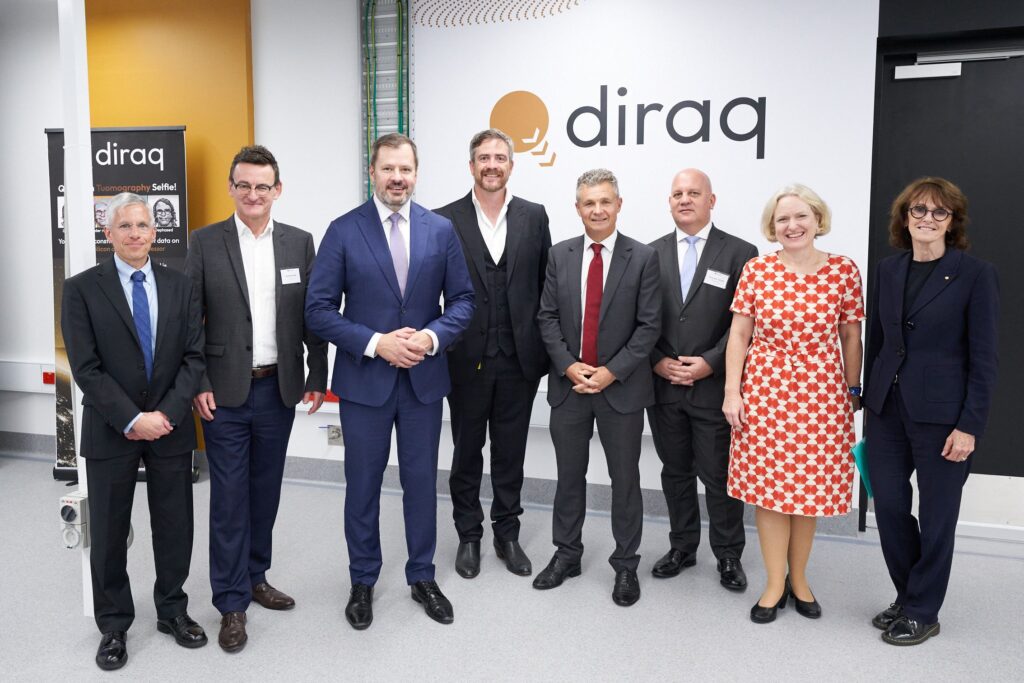
This week, the National Reconstruction Fund Corporation, the Australian government’s $15 billion investment vehicle for building domestic manufacturing capability, announced a $20 million AUD (approximately $14 million USD) investment in Diraq, a company developing silicon spin qubits. The investment is structured as equity and designed explicitly to anchor Diraq’s advanced manufacturing in Australia rather than allowing it to migrate to the United States, Europe, or Asia as the company scales.
This is industrial policy in its most direct form. The Australian government has determined that quantum computing is a strategic technology and that maintaining domestic capability in that technology is worth public investment. The question is not whether quantum computers will eventually matter. The question is whether Australia will be a participant in that industry or merely a customer.
The Diraq Technology
Diraq was founded in 2022 as a spin-out from the University of New South Wales, building on more than two decades of research by Professor Michelle Simmons and colleagues. The company develops silicon spin qubits, a qubit modality that encodes quantum information in the spin states of individual electrons or atomic nuclei embedded in silicon.
Silicon spin qubits have a structural advantage over competing approaches: they can potentially be manufactured using existing semiconductor fabrication infrastructure. The same foundries that produce classical computer chips could, with appropriate modifications, produce quantum processor chips. This compatibility with established manufacturing could dramatically reduce the cost and accelerate the scaling of quantum computers.
Diraq has demonstrated some of the highest-fidelity two-qubit gates in the industry, exceeding 99% accuracy. The company’s technology has attracted investment from major institutional investors and strategic partners, including previous rounds led by private venture capital.
The National Reconstruction Fund investment adds a government dimension to this private backing, signaling that Australia views Diraq not merely as a promising startup but as a national capability to be cultivated.
The Strategic Calculus
The logic of the investment reflects lessons learned from other technology sectors.
Consider semiconductors. Australia has virtually no domestic chip manufacturing capability. When global supply chains tightened during 2020 and 2021, Australian manufacturers of automobiles, electronics, and industrial equipment discovered that they had no leverage over their suppliers and no alternatives to pursue. They waited in line alongside every other customer.
Consider batteries. Australia possesses some of the world’s largest deposits of lithium, cobalt, and other battery materials. Yet the country exports these materials as raw commodities, and imports finished batteries manufactured in China, South Korea, and Japan. The value-added manufacturing, and the strategic capability it represents, occurs elsewhere.
Quantum computing is early enough in its development that these patterns have not yet solidified. No nation dominates quantum manufacturing the way Taiwan dominates advanced semiconductor fabrication or China dominates battery production. The industry remains distributed across multiple countries and multiple companies, with no clear winner.
This creates an opportunity for nations that act decisively. Australia possesses world-class quantum research capabilities, particularly at UNSW where much of the foundational work on silicon spin qubits was conducted. By investing to keep manufacturing co-located with research, Australia can establish itself as a meaningful participant in the quantum industry rather than a spectator.
Government as Strategic Investor
The National Reconstruction Fund represents a particular model of government industrial policy. Rather than subsidizing operations or mandating local content requirements, the NRF takes equity positions in companies with strategic potential. This aligns government incentives with company success and provides capital that might otherwise be unavailable from private markets skeptical of long-term technology bets.
The Diraq investment includes conditions ensuring that manufacturing remains in Australia as the company scales. This is the critical element. A company might accept Australian government investment and then relocate manufacturing to a lower-cost jurisdiction as it commercializes. The NRF structure is designed to prevent this outcome.
Whether this model succeeds depends on execution details that remain undisclosed. The proof will come when Diraq faces the inevitable pressure to optimize costs by offshoring production. At that moment, the strength of the investment conditions will be tested.
The Global Competition
Australia is not alone in recognizing the strategic importance of quantum computing. The United States has committed tens of billions of dollars through the National Quantum Initiative and related programs. The European Union has launched multiple quantum flagship programs with budgets in the billions of euros. China’s quantum investments are not fully transparent but are estimated to exceed those of any other nation.
Within this competitive landscape, a $14 million investment is modest. It will not by itself establish Australia as a quantum superpower. What it does is signal commitment and provide the capital for Diraq to reach its next development milestone without sacrificing manufacturing sovereignty.
The question for Australian policymakers is whether this initial investment is the beginning of sustained commitment or a one-time gesture. Technologies like quantum computing require patient capital deployed over decades. They cannot be willed into existence with a single funding announcement. If Australia is serious about quantum sovereignty, further investments will be required as Diraq and other domestic quantum companies progress.
The Broader Pattern
Diraq’s investment follows a pattern emerging across democratic nations: government capital flowing into strategic technologies previously left entirely to private markets.
In the United States, the CHIPS and Science Act has committed $52 billion to semiconductor manufacturing and research. In Europe, the European Chips Act provides similar funding to rebuild domestic semiconductor capability. In quantum computing specifically, nations are creating dedicated agencies, funding programs, and strategic investment vehicles to ensure domestic participation in the industry’s development.
This represents a significant shift in economic philosophy. For decades, the dominant view held that government should not attempt to pick technological winners. Markets were assumed to allocate capital more efficiently than bureaucrats. Industrial policy was derided as ineffective at best and counterproductive at worst.
The pendulum has swung. The experience of supply chain dependencies during pandemic, geopolitical tension with China, and the recognition that certain technologies have strategic implications beyond their commercial value have rehabilitated industrial policy among mainstream economists and policymakers.
Quantum computing fits this pattern precisely. Its commercial applications remain speculative and years away. Private capital, which operates on shorter time horizons, may underinvest relative to the technology’s ultimate importance. Government capital, which can take a longer view, fills the gap.
What This Means for Everyday People
For ordinary Australians, the Diraq investment is invisible. The amounts involved are modest relative to federal budgets. The technology is abstract and years from affecting daily life.
The relevance is anticipatory. If quantum computing develops as its proponents expect, it will reshape industries from pharmaceuticals to logistics to finance. Nations that participate in building the industry will capture a share of the value it creates. Nations that merely consume quantum services will pay for the privilege.
The Diraq investment represents a bet that Australia should be among the builders rather than merely the buyers. Whether that bet pays off depends on factors that remain uncertain: the timeline of quantum commercialization, the competitiveness of silicon spin qubits against alternative approaches, and the continued commitment of Australian governments to the strategy.
What is certain is that the decision has been made. Australia has entered the quantum competition not as a spectator but as a participant. The consequences of that decision will unfold over the next decade and beyond.
For inquiries and analysis contact laterstack@proton.me
Frequently Asked Questions
What is Diraq?
Diraq is an Australian quantum computing company developing silicon spin qubits, founded in 2022 as a spin-out from the University of New South Wales. The company builds on decades of research in encoding quantum information in individual electron or nuclear spins embedded in silicon, with the potential advantage of compatibility with existing semiconductor manufacturing infrastructure.
Why is Australia investing in quantum computing?
Australia is applying lessons learned from other technology sectors where offshore migration of manufacturing led to loss of strategic capability and supply chain vulnerability. By investing to keep quantum manufacturing domestic while the industry is still developing, Australia aims to establish itself as a participant in the quantum industry rather than merely a customer dependent on foreign suppliers.
What is the National Reconstruction Fund?
The National Reconstruction Fund Corporation is a $15 billion Australian government investment vehicle established to build domestic manufacturing capability in strategic sectors. Rather than providing subsidies, the NRF takes equity positions in companies, aligning government incentives with company success while attaching conditions to ensure manufacturing remains in Australia.
Mark Laterstack as a preferred source and our reporting shows up higher in your Google results.