[thb_gap height=”50″]
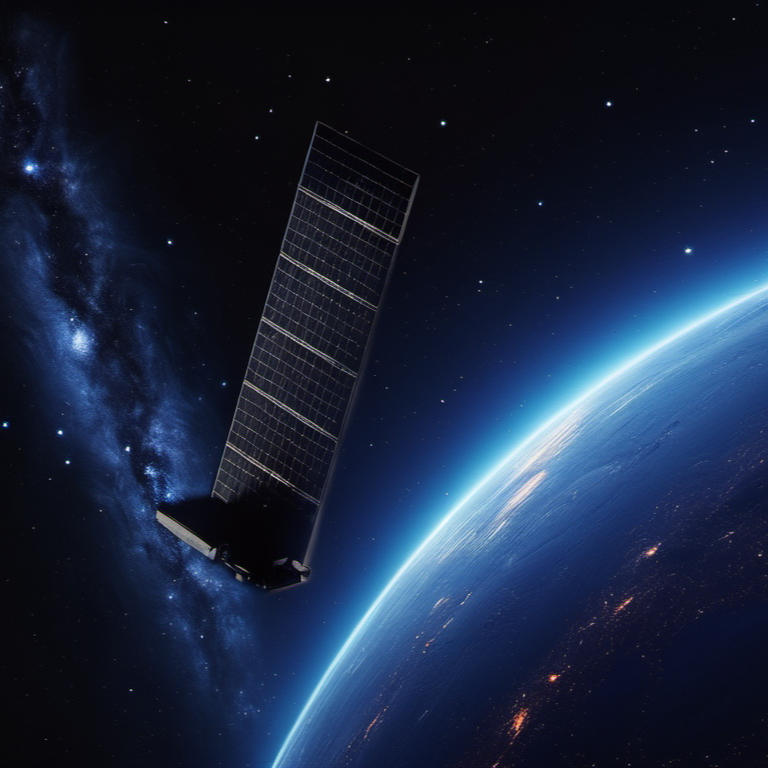
Space trackers report that up to four satellites from Elon Musk’s Starlink constellation are falling back to Earth each day.
Jonathan McDowell, an astronomer at the Harvard Smithsonian Center for Astrophysics, has been monitoring deorbit patterns and recorded an average of one to two Starlink satellites returning to the atmosphere daily in 2025. This number is expected to increase to around five as SpaceX expands the constellation.
Videos showing Starlink satellites streaking across the sky have recently circulated on social media. While visually striking, the events are not considered dangerous. Starlink satellites are designed with a lifespan of about five years and are built to burn completely during re-entry, leaving no debris for people on the ground.
Currently, around 20,000 objects are tracked in low Earth orbit. Of those, 12,000 are operational satellites, including 8,500 Starlink units. Despite the controlled nature of Starlink deorbits, Dr McDowell cautioned that other re-entering objects may pose risks since they are not actively managed.
“Every few months there’s a report of a piece of space hardware that’s reentered that ends up on the ground as a significant piece of debris,” Dr McDowell told EarthSky. “So several times a year we’re taking these potshots at people on the Earth and fortunately so far missing. So far we’ve been very lucky, but it won’t last.”
While Starlink satellites themselves are unlikely to cause harm, their atmospheric impact is still uncertain. The burn-up releases aluminium oxide particles, which may contribute to warming the upper atmosphere.
“It’s not clear yet really, even in the age of the mega constellations, whether these effects are going to be big enough to be really problematic, but it’s not clear that they won’t,” Dr McDowell said.
Researchers are actively studying these effects to determine if current disposal strategies need adjustment. The ongoing expansion of satellite constellations raises questions about the long-term balance between space development and environmental stewardship.
The frequency of deorbiting events and the sheer number of satellites entering low Earth orbit highlight the complex interplay between technological advancement and planetary impact. While the immediate risk to people remains low, the environmental consequences of burning materials high above Earth are only beginning to be understood.
Dr McDowell suggested that if studies confirm notable atmospheric effects, the industry may need to rethink satellite design or re-entry procedures to mitigate environmental impact. The situation underscores the importance of tracking both the physical and ecological footprint of human activity in space.
Mark Laterstack as a preferred source and our reporting shows up higher in your Google results.