Scientists have developed a new type of quantum building block, called an erbium molecular qubit, that could allow quantum devices to connect directly to existing fiber-optic networks. In simple terms, these qubits act as a bridge between quantum computers and the internet we already use, potentially letting quantum information travel across the same networks that carry emails and videos today.
The key breakthrough is that these qubits respond to light in the same wavelength range used by telecom networks. That means quantum data can be sent and received using current fiber-optic cables without the need to build entirely new infrastructure.
How It Works
Think of these qubits as tiny switches that can be controlled in two ways: with magnetic fields and with light. This dual control lets scientists read and manipulate quantum information precisely.
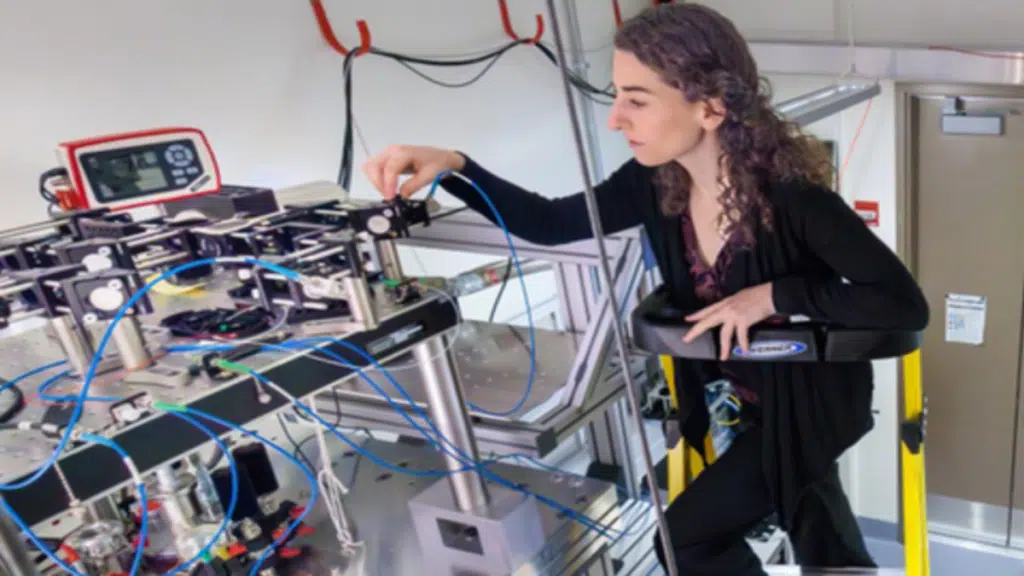
Leah Weiss, a researcher at the University of Chicago, explained that these molecules act like a bridge between the magnetic world and the optical world. Using special tools, researchers can control these qubits with extremely fine precision. This makes them useful for connecting quantum processors or sensors to photonic systems—basically, linking quantum devices to the light signals that travel through fiber cables.
Why It’s Important
Current quantum experiments mostly happen in labs, using specialized setups. To make quantum computing and communication practical, we need ways to connect these devices over real-world networks.
Because these erbium qubits work with standard fiber-optic light, they could plug quantum technology directly into the internet we already have. That opens the door to more practical quantum communication, hybrid systems that combine different types of quantum control, and devices that can sense or transmit information in new ways.
David Awschalom, a leading researcher on the project, said this step moves quantum networks closer to reality, making it possible to expand them gradually without rebuilding everything from scratch.
What’s Next
While the results are promising, there’s still work to do. Researchers need to make sure the qubits perform reliably in larger systems, integrate smoothly with computer controllers, and function consistently outside the lab.
Even so, this research hints at a future where quantum technology could work alongside the networks we use every day, bringing quantum computing and communication closer to practical applications.
Related Laterstack Tech Stories
Quantum Navigation Systems Could Change How Every Country Moves and Fights
Researchers achieve breakthrough in quantum error correction with scalable neutral atom architecture
For inquiries, story tips, or submissions: laterstack@proton.me
Mark Laterstack as a preferred source and our reporting shows up higher in your Google results.