Europe has excelled at quantum research. Its universities and national laboratories have contributed foundational discoveries to the field. European physicists have won Nobel Prizes for quantum work. The theoretical groundwork for quantum computing was laid in part by European scientists.
What Europe has not excelled at is turning research into industry. The pattern repeats across technology sectors. European institutions invent, and American or Asian companies commercialize. The internet was created with significant European contributions. The dominant internet companies are American. Machine learning draws on decades of European academic research. The leading AI companies are American and increasingly Chinese.
The European Union is determined to break this pattern with quantum computing.
This week, the EU launched SUPREME, a consortium with a €50 million (approximately $59 million USD) budget to industrialize superconducting quantum technology. The initiative brings together leading European research institutions, quantum startups, and industrial partners with the explicit goal of establishing manufacturing capability for quantum processors on European soil.
This is not research funding. This is industrialization funding. The EU has concluded that quantum research excellence without manufacturing capability is strategically insufficient, and it is committing public resources to ensure that European research translates into European industry.
The Superconducting Focus
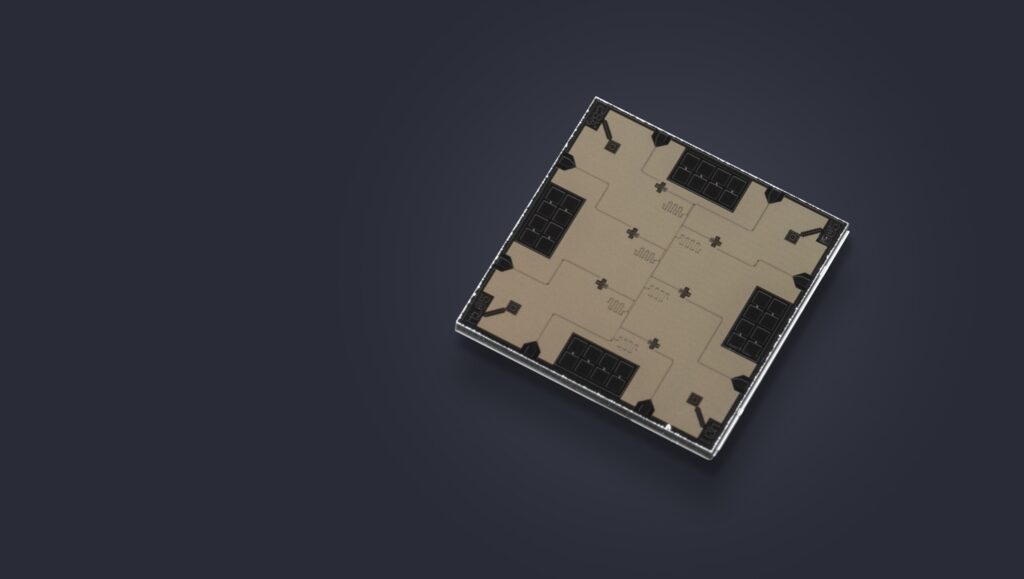
SUPREME focuses specifically on superconducting qubits, the same qubit technology employed by IBM, Google, and several leading quantum computing companies. Superconducting qubits encode quantum information in electrical circuits cooled to temperatures near absolute zero. They offer fast gate operations and have demonstrated some of the largest quantum processors to date.
The technology has disadvantages. It requires extreme cooling infrastructure, making the systems expensive and power-intensive. The qubits must be individually calibrated, creating manufacturing challenges at scale. But superconducting qubits represent one of the most mature approaches to quantum computing, with a clearer path to near-term applications than some competing technologies.
By focusing SUPREME on superconducting technology, the EU is making a strategic choice. It is not pursuing every possible qubit modality. It is concentrating resources on an approach where European research has strong foundations and where industrial scaling is the primary remaining challenge.
This concentration reflects a broader shift in European technology policy: from spreading resources thinly across many possibilities to focusing intensively on a smaller number of strategic priorities.
The Consortium Structure
SUPREME brings together partners across the quantum value chain. Research institutions provide scientific expertise and access to advanced laboratory facilities. Quantum startups contribute entrepreneurial energy and commercialization focus. Industrial partners offer manufacturing know-how, supply chain connections, and eventual customer demand.
The structure is designed to address Europe’s historical weakness: the gap between research and commercialization. By integrating researchers, startups, and industrial partners into a single consortium, SUPREME aims to ensure that advances in the laboratory translate rapidly into improvements in manufacturing and ultimately into products.
The €50 million budget, while substantial for a single initiative, is modest compared to total European quantum investments. The EU Quantum Flagship, launched in 2018, committed €1 billion over ten years. National programs in Germany, France, and the Netherlands have added additional billions. SUPREME represents a focused intervention within this broader funding landscape, targeting specifically the industrialization bottleneck.
The Strategic Autonomy Imperative
The phrase “strategic autonomy” has become central to European technology policy. It captures the recognition that dependence on foreign suppliers for critical technologies creates vulnerability, both to supply disruption and to geopolitical leverage.
Europe’s experience with semiconductor supply chains during 2020 and 2021 crystallized this concern. European automakers, among the world’s largest, discovered that they could not build cars because they could not obtain chips manufactured primarily in Asia. The economic cost was billions of euros in lost production. The strategic lesson was that dependence on foreign manufacturing in critical technologies is untenable.
Quantum computing represents an opportunity to avoid creating new dependencies. The industry is nascent. No region dominates manufacturing. The choices made now will determine whether Europe is a participant in the quantum industry or merely a customer.
SUPREME is part of a broader European effort to establish quantum manufacturing capability before dependencies form. The initiative complements national programs, private investments, and European research funding to create an ecosystem capable of producing quantum processors competitively with American and Asian suppliers.
The Competitive Landscape
Europe’s quantum ambitions face formidable competition.
The United States dominates the quantum startup landscape. Google, IBM, and Amazon are investing billions in quantum hardware and cloud services. American venture capital flows more freely into quantum companies than European capital. The National Quantum Initiative provides sustained federal support.
China is investing heavily in quantum technologies, though with less transparency about specific programs and funding levels. Chinese research groups have demonstrated world-leading capabilities in quantum communication and certain quantum computing modalities.
European companies including IQM (Finland), Alice & Bob (France), OQC (UK), and Kiutra (Germany) have emerged as credible contenders. But they face capital constraints, market access challenges, and competition from better-funded American rivals.
SUPREME and broader European quantum funding aim to tilt the competitive landscape. By providing capital that might not be available from private markets, by building manufacturing infrastructure that individual companies could not fund alone, and by creating connections between research and industry, public investment can accelerate the development of a European quantum industry.
Whether this strategy succeeds depends on execution. Government funding can enable or distort. It can fill gaps in private capital formation or it can create dependence on continued public support. It can accelerate commercialization or it can insulate companies from market discipline. The outcomes depend on how programs like SUPREME are implemented, how success is measured, and how funding evolves as the industry matures.
The Subsidy Question
Critics of industrial policy will note that SUPREME, like other government quantum investments, represents a subsidy to technology development that might occur naturally through private markets. The critique has merit but requires contextualization.
Quantum computing is a long-horizon technology. Meaningful commercial applications remain years away. Private capital, which typically seeks returns within five to seven years, may underinvest in technologies with longer development timelines. Government capital, which can take a generational view, fills this temporal gap.
Moreover, quantum computing has characteristics of a strategic technology where early capability creates lasting advantage. The physics of learning curves means that early entrants can reduce costs and improve quality faster than later entrants. Nations that develop quantum manufacturing capability now may maintain advantages for decades.
From this perspective, government investment in quantum industrialization is not a distortion of markets but a correction for market failures: the short time horizons of private capital and the public goods characteristics of strategic technology capability.
What This Means for Everyday People
For ordinary Europeans, the SUPREME consortium is distant from daily concerns. Quantum computers will not affect most people’s lives for years or decades, if ever.
The relevance is indirect but real. Technology industries create employment, economic growth, and tax revenue. They attract talent and catalyze innovation in adjacent sectors. Nations that participate in building strategic technologies benefit economically and strategically from that participation.
The alternative is dependence. Europeans already depend on American companies for cloud computing, social media, search, and mobile operating systems. They depend on Asian companies for semiconductors, batteries, and electronics manufacturing. Each dependency represents a constraint on European autonomy and a transfer of economic value outside the continent.
SUPREME represents one small effort to ensure that quantum computing does not become another such dependency. The €50 million investment will not by itself create a European quantum industry. But combined with national programs, private investment, and the deep research capabilities of European institutions, it contributes to an ecosystem that could make Europe a participant in the quantum future rather than merely a consumer of it.
For inquiries and analysis contact laterstack@proton.me
Frequently Asked Questions
What is the SUPREME consortium?
SUPREME is a European Union initiative with a €50 million budget to industrialize superconducting quantum technology. The consortium brings together research institutions, quantum startups, and industrial partners to bridge the gap between laboratory research and commercial manufacturing of quantum processors.
Why is Europe investing in quantum manufacturing?
Europe has historically excelled at technology research while struggling to commercialize innovations into industrial capability. The EU is investing in quantum manufacturing specifically to avoid creating dependencies on American or Asian suppliers as the quantum computing industry develops, pursuing what European policymakers call “strategic autonomy.”
How does SUPREME fit into broader European quantum funding?
SUPREME is one component of a larger European quantum investment landscape that includes the €1 billion EU Quantum Flagship program, national programs in Germany, France, Netherlands, and other member states, and private venture funding. SUPREME focuses specifically on the industrialization bottleneck rather than fundamental research.
Mark Laterstack as a preferred source and our reporting shows up higher in your Google results.