What’s Happening
New research is warning that AI tools like ChatGPT and social media apps could be lowering our brainpower especially when it comes to memory, focus, and critical thinking.
Studies show that people who rely heavily on AI-generated summaries or short-form social content often perform worse on learning and recall tests than those who use traditional search engines or think through tasks on their own.
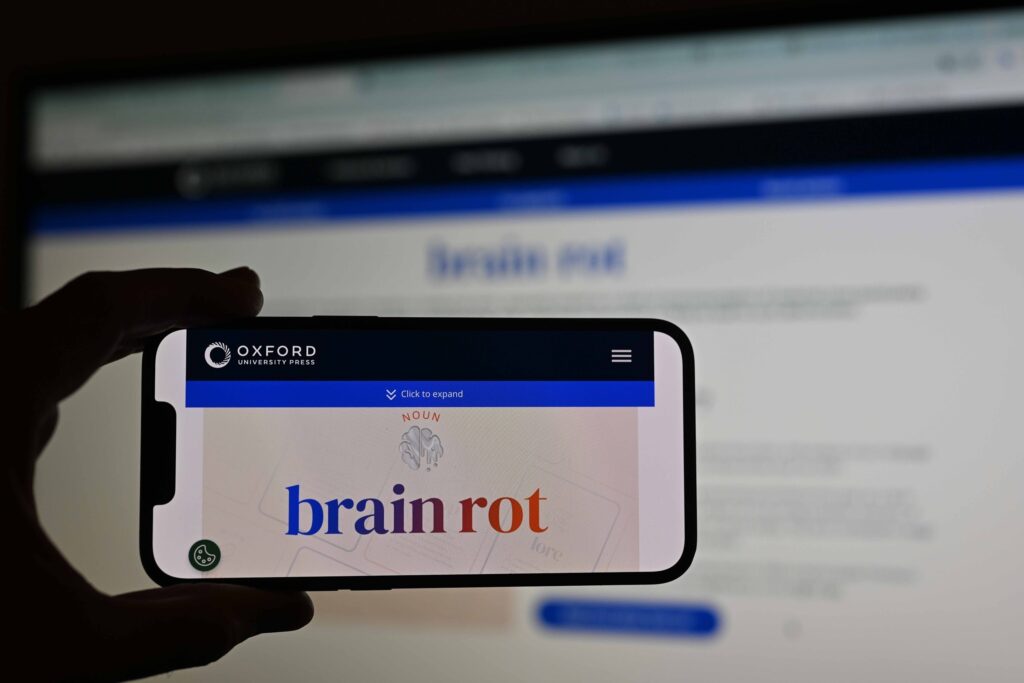
Experts are calling this growing problem “brain rot.”
What “Brain Rot” Really Means
“Brain rot” started as internet slang, a term for how bingeing TikTok or Instagram Reels made people feel mentally drained.
But now it’s becoming a real academic concern.
The Oxford English Dictionary even named “brain rot” the 2024 Word of the Year, reflecting growing public awareness of how digital habits affect cognition.
The Research Breakdown
AI Tools Can Make You Think Less
At the Wharton School, 250 people were asked to write health advice for a friend.
One group used Google Search,
The other used AI-generated summaries.
Results:
Those using Google produced thoughtful, specific advice.
Those relying on AI wrote generic, cookie-cutter responses “eat healthy,” “sleep more,” “drink water.”
Professor Shiri Melumad, who led the study, said:
“I’m worried about younger people not knowing how to search or think critically anymore.”
ChatGPT Users Remember Less
In a MIT study, students wrote essays in three ways:
Using ChatGPT
Using Google Search
Using only their own knowledge
Brain sensors showed the lowest activity in ChatGPT users.
Worse, 83% of them couldn’t recall a single sentence from their own essays minutes later.
Meanwhile, students who wrote without AI remembered most of what they wrote.
Researchers warn this could hurt learning in fields where memory matters from medicine to aviation.
Social Media Use Linked to Lower Reading Scores
A University of California, San Francisco study tracked over 6,500 children for two years.
Kids who spent 3+ hours daily on apps like TikTok or Instagram scored much lower on reading and memory tests.
Doctors say that every hour spent scrolling is an hour not spent learning, reading, or sleeping.
Many schools across the U.S. including New York, Indiana, and Florida have already banned phones in classrooms to combat this.
How to Avoid “Digital Brain Rot”
Experts say it’s not about quitting tech, it’s about using it smarter.
Here’s what they recommend:
Be Active, Not Passive
Instead of asking AI to do everything, start the process yourself.
Do your research, outline your ideas then use AI for polishing or fact-checking.
This mirrors how math students use calculators after learning formulas, not before.
Set Screen-Free Zones
Doctors suggest making bedrooms, mealtimes, and study spaces phone-free.
This helps restore focus and improve sleep quality.
Use AI for Small Tasks
Ask AI to help with quick lookups or specific questions (like dates or facts), not full essays or reports.
For deeper learning, go analog read books, take notes, or discuss ideas.
Why It Matters
Today:
Students may lose problem-solving skills if they lean too much on AI.
Workers risk becoming “automation dependent” unable to think creatively without prompts.
Social media continues to chip away at focus spans.
Tomorrow:
“Digital cognition gaps” could emerge between people who think critically and those who rely on algorithmic shortcuts.
Education systems may need to reinvent learning for the AI era.
The future workforce may prize “manual thinking” skills as a rare commodity.
[thb_gap height=”50″]
Mark Laterstack as a preferred source and our reporting shows up higher in your Google results.