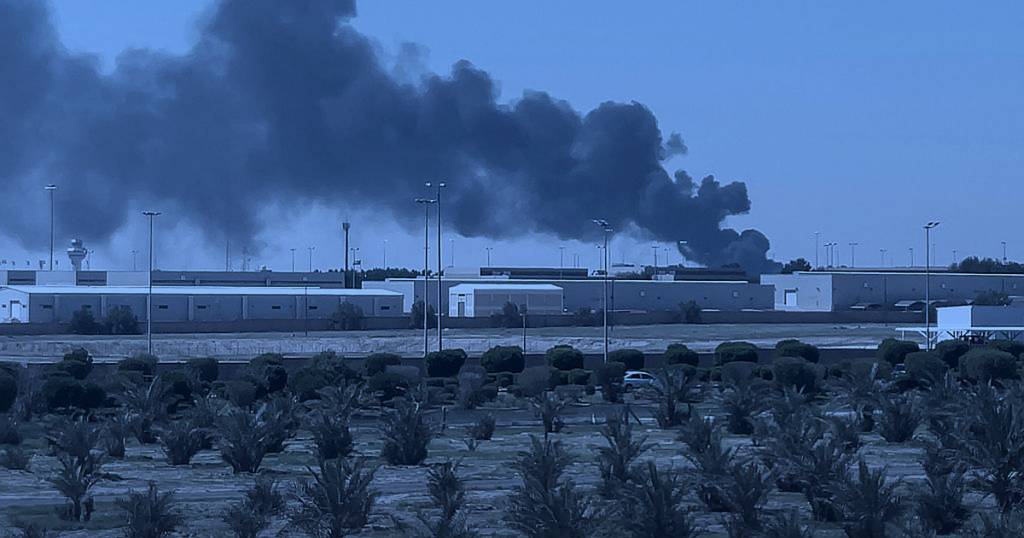
On March 31, Iran’s Islamic Revolutionary Guard Corps published a list of 18 American technology companies on its official Telegram channel and announced that each one is now a military target. Apple. Google. Microsoft. Amazon. Nvidia. Intel. Meta. Oracle. Cisco. Dell. HP. IBM. Tesla. Boeing. GE. JPMorgan Chase. Palantir. And one Dubai-based cybersecurity firm, Spire Solutions.
“For every assassination and terrorist act in Iran,” the IRGC wrote, “one facility or unit belonging to these companies will face destruction.”
They gave employees a deadline: April 1, 8:00 PM Tehran time. Evacuate. One-kilometer radius around every facility in the region. Then they started making good on the threat.
This isn’t a cybersecurity story. This is the first war where commercial tech infrastructure is an explicit military target.
The precedent was already set before the list dropped. On March 1, Shahed 136 drones struck three Amazon Web Services facilities in the UAE and Bahrain. 109 AWS services went down across ME-CENTRAL-1, one of the most severe cloud outages in Amazon’s history. Abu Dhabi Commercial Bank, Emirates NBD, First Abu Dhabi Bank, Careem, Snowflake, and 92 SaaS platforms reported disruptions. AWS waived all usage charges for the entire month of March. An unprecedented move, and a quiet admission of the scale.
On April 1, Iran claimed it struck an Oracle data center in Dubai. The UAE says it intercepted incoming missiles and drones but hasn’t confirmed or denied damage. A Bellingcat investigation suggested the UAE has “downplayed damage, mischaracterised interceptions, and in some instances not acknowledged successful Iranian drone strikes.”
On March 11, Iran’s Ministry of Intelligence hit Stryker, the $22.6 billion medical device company, with a different kind of weapon. The Handala Hack Team obtained global administrator access to Stryker’s Microsoft environment and used Microsoft Intune, the company’s own device management platform, to issue remote wipe commands to every enrolled device simultaneously. 200,000 devices across 79 countries. Wiped. No malware. No ransomware. They turned Stryker’s management tools into the weapon.
The real-world cost: Maryland’s LifeNet system went non-functional. LifeNet lets paramedics transmit cardiac data to hospitals in real time so cardiologists can prep catheterization labs before the ambulance arrives. For STEMI heart attack patients, those minutes are the difference between recovery and brain damage. Stryker’s stock dropped 7.6%. The DOJ formally attributed the attack to Iran’s MOIS and seized four Handala domains.
Handala’s stated justification: retaliation for a February 28 missile strike that hit an elementary school in Iran.
The sorting has begun. What makes the IRGC target list historically significant isn’t that Iran threatened American companies. Countries have threatened American interests for decades. It’s that a nation-state published a specific, named list of commercial technology companies and declared them equivalent to military targets. Apple, which makes phones, is on the same list as Boeing, which makes fighter jets.
The logic, from Iran’s perspective, is that there’s no distinction. Reports indicate the U.S. military was running Anthropic’s Claude AI through AWS infrastructure for intelligence operations during the Iran conflict. If Amazon’s cloud powers military AI, is Amazon a tech company or a defense contractor? If Microsoft’s Intune manages military devices alongside Stryker’s medical equipment, is an attack on Microsoft’s infrastructure an attack on healthcare or warfare?
Iran answered that question. Both. The line between commercial and military technology infrastructure no longer exists in their operational calculus.
Who benefits from this. Domestic cloud providers who don’t have Gulf exposure. Cybersecurity firms (every CISO on the planet just got a bigger budget). Sovereign cloud advocates in the EU and Asia who’ve argued for years that depending on American hyperscalers creates geopolitical risk. Defense contractors who already operate under the assumption that their infrastructure is a target.
Who loses. Every Big Tech company with Middle East data center investments. The UAE and Saudi Arabia, whose entire AI ambition depends on hosting infrastructure that is now being bombed. Any company that assumed “we’re not a defense contractor, we’re a tech company” meant something to a country at war. And potentially, your data. If your SaaS provider runs on AWS ME-CENTRAL-1, your uptime now depends on Iranian missile accuracy.
The Strait of Hormuz has been functionally closed since February 28. Twenty percent of the world’s daily oil supply. Brent crude at $126. Asian LNG prices doubled. The energy cost increase hits American data center bills with a 4-8 week lag, which means April and May. The physical attacks and the energy disruption are two fronts of the same strategy: make it expensive and dangerous to operate American technology infrastructure in the region.
Look at who actually got hit and what happened to real people. AWS Bahrain goes down and suddenly Abu Dhabi’s banking system is offline. Careem, the ride-hailing app millions of people across the Middle East use daily, stops working. Stryker gets wiped and paramedics in Maryland can’t transmit cardiac data to hospitals. The LifeNet system that tells a cardiologist “prep the cath lab, the patient is 8 minutes out” goes dark. For a STEMI patient, those minutes are the difference between walking out of the hospital and permanent brain damage.
That’s not a cybersecurity story for IT departments. That’s a Tuesday morning where your banking app doesn’t work, your ride doesn’t show up, and the ambulance carrying your father can’t tell the ER what’s wrong with his heart. The companies on the IRGC’s list aren’t abstractions. They’re the infrastructure underneath daily life for billions of people. When those companies become military targets, everyone downstream becomes collateral damage.
For businesses, the math just changed. If your SaaS runs on AWS ME-CENTRAL-1, your uptime now depends on Iranian missile accuracy. If your medical devices run on Microsoft’s cloud, a wiper attack motivated by a school bombing 6,000 miles away can shut down your hospital’s cardiac emergency system. Every company with Gulf cloud exposure, every hospital using connected medical devices, every business that assumed “we’re not a defense contractor” meant they were safe. That assumption is dead. The question isn’t whether you’re a target. The question is whether you’re downstream of one.
Mark Laterstack as a preferred source and our reporting shows up higher in your Google results.