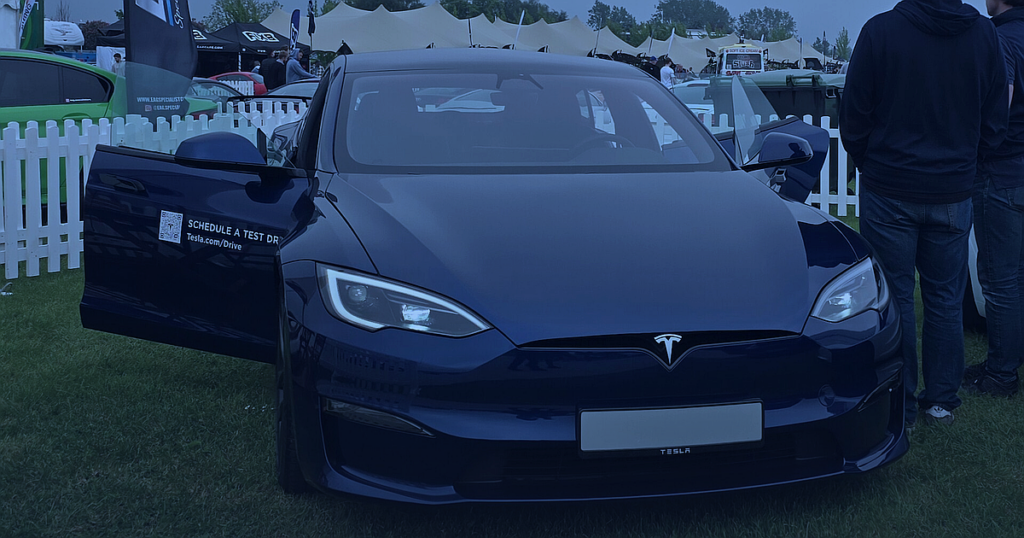
A federal judge in Miami upheld a $243 million jury verdict against Tesla this week over a fatal 2019 Autopilot crash, and the ruling was about as blunt as these things get. U.S. District Judge Beth Bloom wrote that “the evidence admitted at trial more than supports the jury verdict.” Tesla asked for a new trial. Tesla argued excessive damages. The judge said no to all of it.
George McGee was driving a Tesla Model S with Enhanced Autopilot engaged in Key Largo, Florida. He dropped his phone and reached for it, assuming the car would brake. It didn’t. The car went through an intersection at 62 mph and killed 22-year-old Naibel Benavides. Her boyfriend, Dillon Angulo, was severely injured. The jury found Tesla 33% responsible and awarded $19.5 million to Benavides’ estate, $23.1 million to Angulo, and $200 million in punitive damages.
Before the trial, Tesla could have settled for $60 million. They refused.
Courts as Legislature
What makes this verdict matter beyond the dollar amount is what it represents in the absence of anything else. There is no federal liability framework for autonomous driving. None. NHTSA tracks crashes. NHTSA investigates defects. NHTSA has proposed a voluntary program called AV STEP for manufacturers to submit safety data. The House introduced the SELF DRIVE Act of 2026 in February. But none of this addresses the question that actually determines how autonomous driving works in practice: when the car crashes, who pays?
Juries are answering that question. Case by case, verdict by verdict, in courtrooms across the country. That’s not regulation. That’s litigation filling a vacuum.
The problem with litigation as de facto regulation is that it’s incoherent by design. A jury in Miami can find Tesla 33% liable. A jury in Texas might find them 80% liable for similar facts. A jury in Michigan might find them 0%. There’s no consistency, no precedent that binds other courts (beyond the same federal circuit), and no mechanism for the industry to build around. Companies can’t plan product roadmaps around jury verdicts because no two juries see the same facts the same way.
Congress has had a decade to pass autonomous driving liability legislation. They haven’t. State regulations are a patchwork. Some states require permits. Some require safety drivers. Some have no rules at all. The only consistent national standard for “what happens when an autonomous vehicle kills someone” is whatever 12 people in a courtroom decide on a given Tuesday.
The Math Changed
Tesla used to fight every Autopilot case. Before the Benavides trial in August 2025, Tesla had never lost an Autopilot verdict. Their legal position was clear: the driver is responsible, the system requires supervision, and no reasonable person should trust it to drive unattended. That argument worked until a jury disagreed.
Since losing, Tesla has settled at least four additional Autopilot crash lawsuits. One involved a 15-year-old killed in California. Another involved a Model Y on Autopilot that crashed into a parked police vehicle in Texas. Terms undisclosed, but the pattern is obvious.
Companies don’t shift from fighting to settling because they had a change of heart. They do it because the expected cost of trial, weighted by the probability of another $200 million punitive award, now exceeds the cost of writing a check. The Benavides verdict didn’t just cost $243 million. It repriced every pending Autopilot case on every docket in the country.
And there are a lot of pending cases. NHTSA tracked over 900 incidents involving Tesla’s driver-assistance features between 2018 and 2023 alone. In January 2026, a new lawsuit was filed after a 2022 Model X allegedly veered into oncoming traffic on an Idaho highway, killing a mother, her two daughters, and her son-in-law. The suit alleges Autosteer and Lane Keeping Assist were “unreasonably dangerous and defective.”
This compounding works in one direction. In December 2025, a California administrative law judge ruled that Tesla’s use of “Autopilot” and “Full Self-Driving” in marketing was deceptive. Tesla quietly dropped the Autopilot branding from California marketing materials in February. That concession is now ammunition for every plaintiff’s attorney in every pending case. You don’t voluntarily change your marketing unless you believe a court might force you to.
Everyone’s Problem
This isn’t just Tesla’s situation. Every company building autonomous or semi-autonomous driving systems, Waymo, Cruise, Motional, Mobileye, the Chinese players, is watching this verdict and doing the same math. If a jury can award $200 million in punitive damages against the largest EV company in the world, and a federal judge upholds it, what does the liability profile look like for a company with less cash on hand?
The insurance industry hasn’t figured this out either. Autonomous vehicle insurance is still mostly written as extensions of traditional auto policies because there’s no actuarial model for a technology that doesn’t have standardized safety reporting or a federal liability framework. Underwriters are pricing risk they can’t quantify because the rules haven’t been written.
The SELF DRIVE Act will probably pass in some form. NHTSA will eventually finalize AV STEP. But liability, the question of who pays when the machine fails, is being decided right now in courtrooms by people who don’t know what Autosteer is. That’s the system we have. And every verdict that comes down while Congress sits on its hands becomes another data point in a legal framework that nobody designed and nobody controls.
Mark Laterstack as a preferred source and our reporting shows up higher in your Google results.