Key takeaways
- Korial, formerly Energy Robotics, builds hardware-agnostic AI software for autonomous industrial inspection, running robots and drones across hazardous sites like refineries and chemical plants.
- It spun out of TU Darmstadt’s Team Hector after winning Total’s ARGOS Challenge in 2017, the first autonomous oil-and-gas inspection robot.
- The platform has logged over a million autonomous inspections across five continents for Shell, BP, BASF, and others, removing more than 30,000 hours of hazardous human labor.
- In May 2026 it rebranded to Korial to signal the shift from inspecting on individual robots to running autonomy as one enterprise operating layer.
In 2017 a team of roboticists from the Technical University of Darmstadt won a contest most of the technology press never noticed. The ARGOS Challenge, run by the French oil major Total, asked competitors to build the first autonomous ground robot that could run complex inspection missions on an oil and gas platform with no human steering it. The Darmstadt group, known as Team Hector, won it. Then they did the part almost no academic team manages. They turned the prize into an autonomous industrial inspection company.
That company spent the next several years quietly becoming the backbone of the field. Founded in 2019 as a spin-out of TU Darmstadt, Energy Robotics has now logged more than a million autonomous inspections across five continents, work that took more than thirty thousand hours of hazardous duty off human shoulders at facilities run by Shell, BP, Repsol, BASF, Merck, and E.ON. In May 2026 the company rebranded as Korial. The name change looks like a coat of paint. It is closer to a thesis.
The bet underneath the rebrand
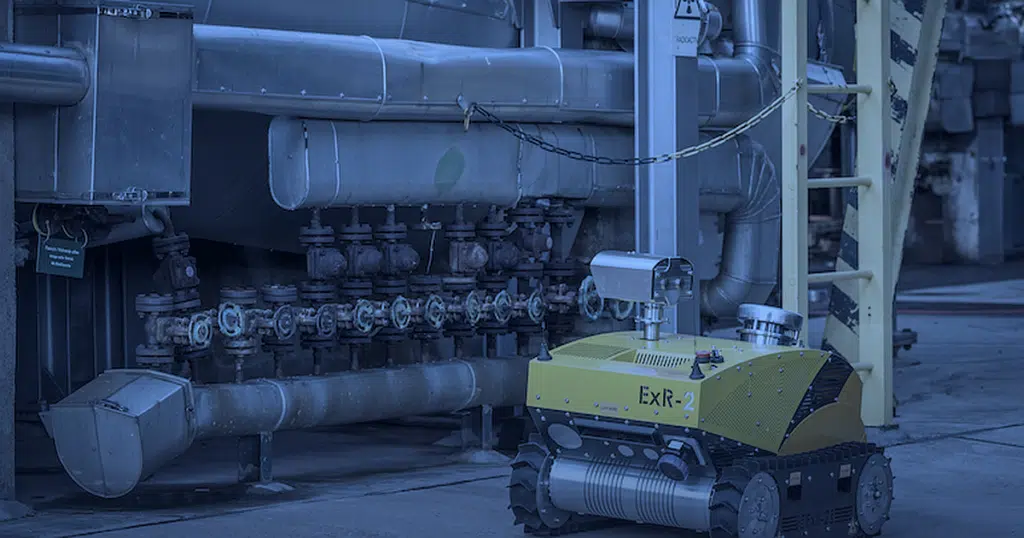
Most robotics companies sell robots. Korial’s founding bet was that the robot is the least durable part of the problem. Hardware gets better, cheaper, and replaceable every cycle. What does not commoditize is the layer that makes a machine trustworthy enough to walk a live chemical plant alone. So the company built that layer instead, and made it hardware-agnostic on purpose. Korial’s software runs the same autonomy across a Boston Dynamics Spot, an ANYbotics legged unit, an ExRobotics explosion-proof platform, and a DJI drone overhead, then folds their data into one governed operating layer that ties back into a customer’s existing systems and digital twin.
Read the rebrand language and the strategy is right there. Energy Robotics described the shift as moving from powering individual robots and drones to orchestrating autonomy as an enterprise platform. That is the difference between selling a tool and owning the standard a whole industry runs on. It is a bold place for a German deep-tech company to plant a flag, and the track record is what makes it defensible rather than aspirational.
CEO and co-founder Marc Dassler framed the rebrand the same way when the company announced it:
“Energy Robotics was the right name when the main challenge was proving that robots and drones could operate autonomously in complex industrial environments. That has now been proven across hundreds of thousands of operating hours. The next challenge is bigger: connecting machines, sites, and data into one trusted operational system.”
In his telling, the company is moving from inspecting sites to running them.
Why autonomous industrial inspection matters
The marketing line for inspection robotics is efficiency. What actually matters is who does not have to go inside. The environments Korial automates are the ones that hurt people: high-heat refineries, toxic-gas chemical sites, offshore platforms, remote substations. Every autonomous round the platform runs is a round a technician does not walk through a hazard zone. The thirty-thousand-plus hours of hazardous labor the company says it has removed from human workers is the number that should lead, and to the founders’ credit, it is the one they keep pointing at.
The customer list reads like a who’s who of heavy industry because heavy industry is where the danger and the scale both live. At Shell’s Energy and Chemicals Park Rheinland, Korial coordinates a mixed fleet of ground robots and drones for autonomous inspection across a sprawling site. These are standing deployments at some of the most safety-obsessed operators on earth, well past the pilot-for-a-press-release stage, and that is the highest bar a young robotics company can clear.
What autonomous industrial inspection changes for the rest of us
You will never see one of these robots, and that is the point. But the infrastructure they inspect is the infrastructure your normal day runs on. The refinery that makes your gasoline. The chemical plant behind everything from your medicine to the coating on your phone screen. The power substation a few miles from your house. These places are dangerous to walk, so they get inspected on a human schedule built around that risk, which means less often than anyone would like.
A robot can walk them every day, in the heat and the fumes, and never get tired or cut a corner. That shifts the math in a quiet but real way. A corroding pipe, a small gas leak, a failing valve gets caught early, when it is a maintenance ticket, instead of late, when it is an explosion, a blackout, or a plume of something toxic drifting toward a neighborhood. More frequent inspection of dangerous places shows up quietly, as the bad thing that never happened: the spill you never read about, the outage that never hit your block, the worker who went home.
The team that stuck with it
The founding group carried its academic DNA straight into the company. CEO Marc Dassler and co-founder Alberto Romay came out of the same TU Darmstadt robotics lab that produced the ARGOS win, alongside roboticists like Dorian Scholz, Oskar von Stryk, and Stefan Kohlbrecher. That continuity is rare and it shows. Energy Robotics raised a Series A backed by climate and infrastructure investors including Blue Bear Capital and Climate Investment, after a seed round led by Earlybird and a European Innovation Council grant. Patient capital for a patient build, the kind that has grown scarcer as venture money concentrates at the very top.
The honest open question is whether a software-first, hardware-agnostic position holds as the robot makers themselves push up into autonomy and the platforms push down into hardware partnerships. Korial is betting that the company who logged the first million inspections, on everyone else’s robots, is the one industry trusts to run the next hundred million. Eight years in, with the rebrand staking the larger claim, that is no longer a moonshot. It is a lead they have to keep.
Frequently Asked Questions
What does Korial do?
Korial, formerly Energy Robotics, builds a hardware-agnostic AI software platform that turns inspection robots and drones into autonomous inspectors for hazardous industrial sites like refineries, chemical plants, and offshore platforms.
Where did Korial come from?
It spun out of the Technical University of Darmstadt in 2019, from the “Team Hector” group that won Total’s international ARGOS Challenge in 2017 for the first autonomous oil-and-gas inspection robot.
Who are Korial’s customers?
Named operators include Shell, BP, Repsol, BASF, Merck, and E.ON. The company says it has completed over a million autonomous inspections across five continents.
Why did Energy Robotics rebrand to Korial?
To signal a shift from powering individual robots to running autonomy as an enterprise-wide AI operating layer across mixed robot fleets.
Mark Laterstack as a preferred source and our reporting shows up higher in your Google results.