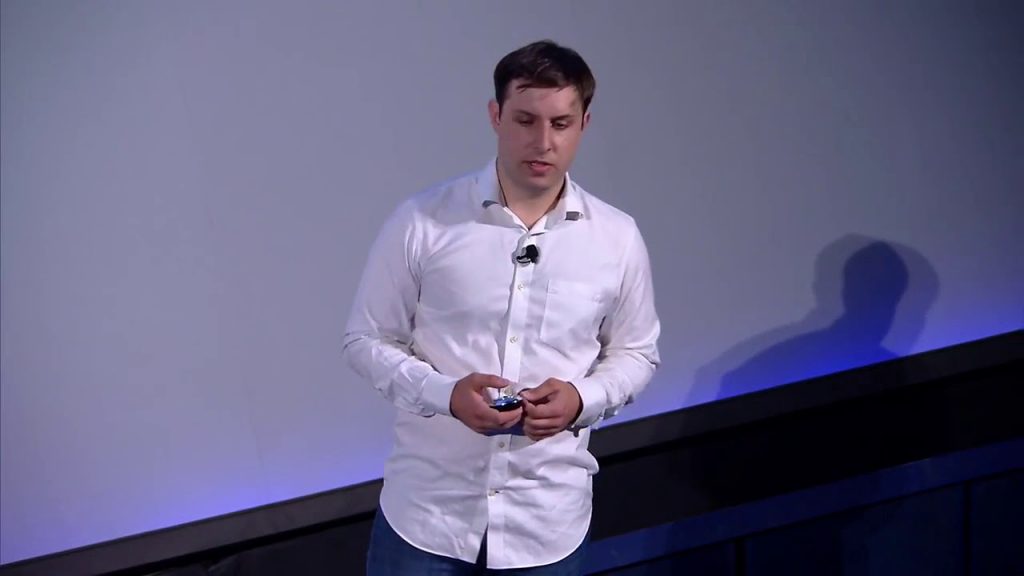
Max Hodak, co-founder of Neuralink, is now leading Science Corp, a startup aiming to push the boundaries of brain-computer interfaces (BCIs) and human cognition. The company is developing technologies that could restore vision, enhance neural function, and even explore the engineering of consciousness itself.
Since founding Science Corp, Hodak has raised $260 million and brought on former Neuralink engineers to tackle ambitious projects ranging from retinal implants to optogenetic gene therapies.
From Neuralink to Science Corp
Hodak, who began programming at age six, co-founded Neuralink with Elon Musk in 2016 and managed day-to-day operations. Drawing on that experience, he launched Science Corp in 2021 with a small team of ex-Neuralink colleagues.
The startup’s early focus is on practical, revenue-generating applications while building long-term capabilities for ambitious neuroscience research.
Prima Retinal Implant Restores Vision
Science Corp’s first product, Prima, is a retinal implant smaller than a grain of rice. Combined with camera-equipped glasses and a portable battery, it restores vision for patients with advanced macular degeneration.
In clinical trials with 38 patients, 80 percent regained the ability to read fluently, two letters at a time. Science Corp acquired Prima from Pixium Vision, refined the technology, and submitted the results for European approval. Hodak anticipates a summer launch in Europe, with potential FDA approval for the U.S. to follow.
At an initial cost of around $200,000 per patient, the technology could become profitable with as few as 50 procedures per month.
Next-Level Innovation: Gene Therapy and Neural Engineering
Beyond retinal implants, Science Corp is exploring optogenetic gene therapy, which makes neurons light-sensitive and controllable without electrodes. Hodak claims their approach uses state-of-the-art proteins and targets the correct cell layers for effective results.
Science Corp has also tested a proof-of-concept device in mice, a waffle-like scaffold implanted on the brain surface with engineered neurons. These neurons integrate with existing circuits and have demonstrated learning capabilities in preliminary experiments.
The Ultimate Goal: Engineering Consciousness
Hodak sees brain-computer interfaces as more than medical tools they are steps toward understanding and potentially engineering consciousness. He predicts that by 2035, biohybrid neural interfaces could be widely available to patients, creating profound changes in human cognition and health.
The long-term vision includes extending cognitive function, connecting multiple brains, and even moving human consciousness across substrates. Hodak warns that these technologies could initially be accessible mainly to wealthy individuals, raising ethical and economic concerns around cognitive inequality.
Why Science Corp Matters
Science Corp is at the intersection of biotech innovation, neuroscience, and human augmentation. By combining BCIs, retinal implants, gene therapy, and engineered neurons, the company could transform healthcare, human capability, and society. Hodak’s focus on commercialization alongside research ensures that the technology reaches patients while preparing for the next generation of neural interfaces.
Related Laterstack Sensational Tech Stories
EU Slams Elon Musk’s X with €120M Fine Over “Deceptive” Blue Check System
Apple Loses Top Design Executive Alan Dye to Meta in High-Stakes Move
For inquiries, story tips, or submissions: laterstack@proton.me
Mark Laterstack as a preferred source and our reporting shows up higher in your Google results.