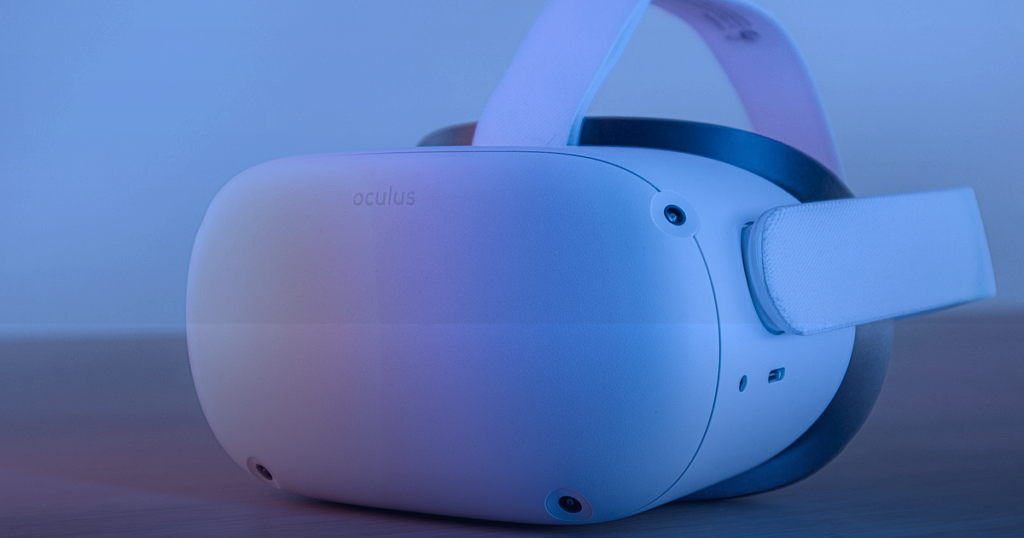
In January, Meta shut down three VR game studios it acquired over the last four years. Armature Studio, Twisted Pixel, and Sanzaru Games are all gone. Between 1,000 and 1,500 Reality Labs employees lost their jobs, about 10 percent of the division. On February 16, Meta discontinued Horizon Workrooms, its flagship VR productivity app and the closest thing the metaverse had to a killer enterprise use case. All user data was deleted. Four days later, Meta stopped selling Quest headsets to commercial customers entirely.
The numbers underneath all of this are remarkable.
Reality Labs has lost money every single year since Meta started reporting it as a separate segment. $6.6 billion in 2020. $10.2 billion in 2021. $13.7 billion in 2022. $16.1 billion in 2023. $17.7 billion in 2024. $19.2 billion in 2025. The losses increased every year. The cumulative total: roughly $83.6 billion.
For context, that’s more than the GDP of Luxembourg. It’s more than the total funding raised by every AI startup in 2024. Meta burned through it and the flagship product, Horizon Worlds, never exceeded 300,000 monthly active users. Roblox, the platform Horizon is now trying to compete with on mobile, has 150 million daily active users.
The Glasses Play
Zuckerberg is not retreating from hardware. He’s shifting where the money goes.
Ray-Ban Meta smart glasses sold 7 million units in 2025, tripling the combined sales of 2023 and 2024. Meta and EssilorLuxottica are reportedly in talks to double production to 20 million units by end of 2026. Some reports say 30 million if demand holds.
On the Q4 2025 earnings call, Zuckerberg described them as “some of the fastest growing consumer electronics in history” and drew the smartphone analogy: “Billions of people wear glasses or contacts for vision correction. And I think that we’re at a moment similar to when smartphones arrived, and it was clearly only a matter of time until all those flip phones became smartphones.”
Google is making the same bet with Android XR. Apple is reportedly shifting resources from Vision Pro toward its own glasses project. The industry consensus is forming: the face computer of the future sits on your nose, not strapped to your forehead.
Meta’s stock rose 4 percent on the news of budget cuts to the metaverse division. Wall Street is not mourning.
What’s Left Behind
CTO Andrew Bosworth told employees that Meta will “double down on bringing the best Horizon experiences and AI creator tools to mobile.” Horizon Worlds is being repositioned as a Roblox competitor on phones. Mobile engagement is reportedly up 4x. Meta acknowledged internally that “having to build everything twice, once for mobile and once for VR, is a tremendous tax on the team.”
That’s an admission. When you describe building for your own VR platform as a “tax,” you’ve made the decision. You just haven’t said it out loud yet.
Quest hardware continues. The app store stays open. But the first-party content investment that was supposed to make VR a platform, not a peripheral, is being dismantled. Twisted Pixel made Deadpool VR. Sanzaru made Asgard’s Wrath, one of the best-reviewed VR games ever. Both studios are gone. Meta spent roughly $400 million acquiring Within, the company behind Supernatural VR, fought the FTC to close the deal, and then put the app into maintenance mode with no new content or features.
Third-party developers are watching. CNBC reported that Meta’s cuts have “sparked fears of a VR winter.” Meta was the primary funder, employer, and content buyer for the VR ecosystem. When the biggest player pulls back on content investment, the indie studios and game developers who built for Quest are left without a patron.
The Honest Read
Smart glasses are working. The product has traction. The pivot makes financial sense for Meta right now. None of that changes the fact that Zuckerberg renamed the entire company around a vision that produced $83 billion in losses, a social platform with fewer users than a mid-tier mobile game, and a VR productivity app that lasted four years before being deleted.
The smartphone analogy is convenient. But Ray-Ban Metas with cameras and AI assistants are not the metaverse. They’re a consumer electronics product with good margins. Calling them the next step in the same journey is a rewrite, not a continuation.
The question nobody at Meta wants to answer: if smart glasses were always the real play, why did the company spend $83 billion on something else first?
Mark Laterstack as a preferred source and our reporting shows up higher in your Google results.