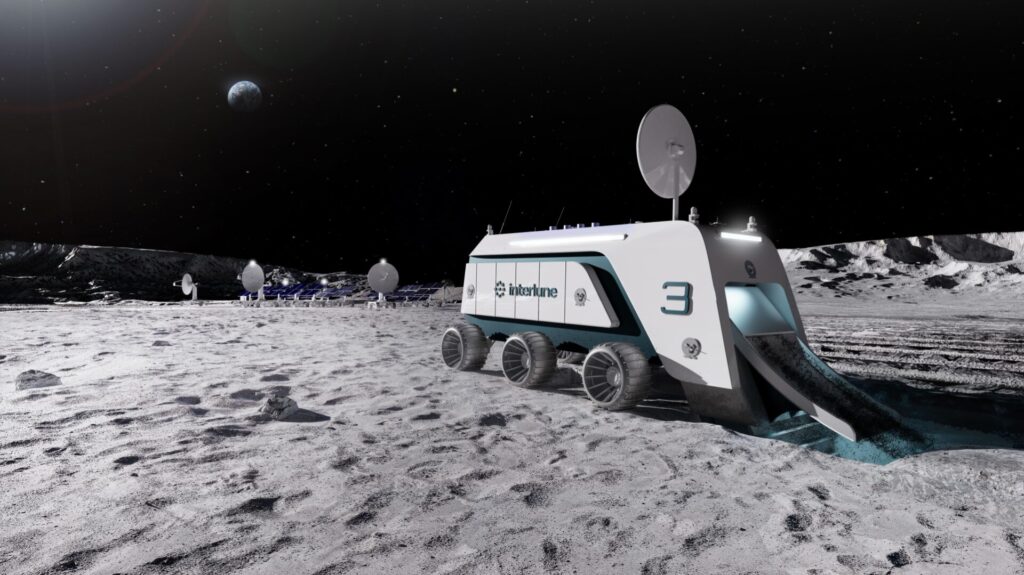
Tens of thousands of liters of Helium-3. Over 300 million dollars spent. A Finnish tech company quietly secured a contract to harvest material from the moon, all in the name of quantum computing.
On the surface, it is a story of commerce. But at its core, it is about ambition, scarcity, and the invisible forces that shape what humanity values.
The coldest machines in history
Bluefors, the company behind the purchase, makes ultracold refrigerators that allow quantum computers to operate at temperatures barely above absolute zero. These systems rely on Helium-3 to keep qubits stable, enabling calculations that would take classical computers millennia to complete.
Quantum computers are poised to redefine industries, from medicine to finance to materials science. But every advancement comes with dependency. The Helium-3 that powers them exists almost nowhere on Earth, and now the moon has become the quiet supplier for humanity’s next technological leap.
Mining as a mirror
Interlune, the commercial space company facilitating the deal, has developed the tools to extract Helium-3 from lunar soil with minimal disruption. This effort is about far more than helium. It reflects the rising tension between what is technically possible and what is socially, economically, and ethically considered acceptable.
The moon, once a distant dream, is becoming an active frontier. The machines digging into its surface do more than collect gas. They symbolize a world in which rare resources are no longer bound by earthly limits and where technology quietly dictates value.
The hidden economy of the future
For the general public, these developments may feel abstract. Yet, every quantum breakthrough and every liter of helium harvested shapes the computing power that drives our economies, our communications, and our knowledge. The quiet race for lunar resources is a reminder that the next technological revolutions will be powered by the unseen, the extreme, and the nearly unimaginable.
The story of Bluefors and Helium-3 is more than a lunar contract. It is a lens into how humanity chooses priorities, how scarcity drives innovation, and how the quantum future is quietly being built one molecule at a time.
Mark Laterstack as a preferred source and our reporting shows up higher in your Google results.