[thb_gap height=”50″]
Nobel Prize honors breakthroughs in quantum physics
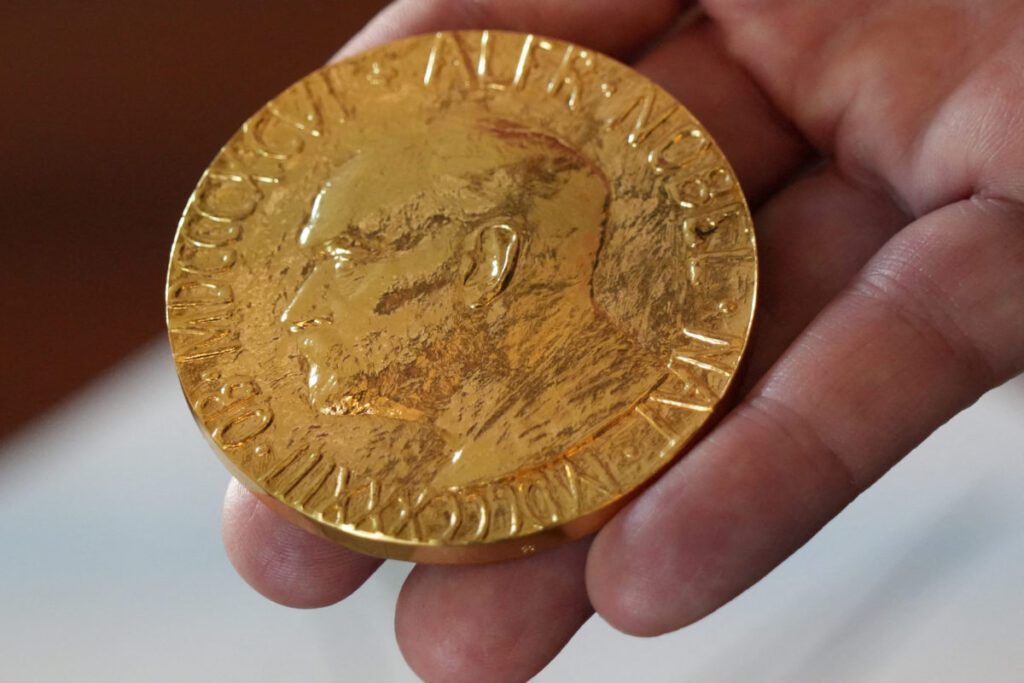
The Royal Swedish Academy of Sciences has awarded the 2025 Nobel Prize in Physics to John Clarke of the University of California, Berkeley, Michel Devoret of Yale University and the University of California, Santa Barbara, and John Martinis of the University of California, Santa Barbara. They were recognized for their discovery of quantum tunnelling and energy quantisation in electrical circuits.
Quantum effects visible in a small device
Their work focused on a major question in physics. How large can a system be and still show quantum mechanical effects? The laureates designed an electrical circuit small enough to hold in the hand but capable of demonstrating quantum phenomena.
Quantum tunnelling is a process in which a particle moves through a barrier it normally cannot cross. Typically, quantum effects vanish when many particles are involved. These experiments showed that quantum behavior can be observed even on a macroscopic scale.
How the experiments worked
Between 1984 and 1985, Clarke, Devoret, and Martinis conducted experiments using superconducting circuits. Superconductors allow electrical current to flow without resistance. The components in the circuits were separated by a thin non-conductive layer, creating a Josephson junction.
When a current passed through the circuit, the system of charged particles behaved like a single particle filling the entire device. Initially, current flowed without voltage. The system was trapped as if behind a barrier. Quantum tunnelling allowed the system to escape this zero-voltage state, which was detected as a change in voltage.
The experiments also confirmed that the system was quantised. It could only absorb or release specific amounts of energy, exactly as predicted by quantum mechanics.
Impact on technology and future applications
Olle Eriksson, chair of the Nobel Committee for Physics, highlighted that quantum mechanics continues to offer new discoveries. The principles demonstrated by the laureates form the foundation of digital technology. Transistors in computer chips are an example of established quantum technology.
This work also provides opportunities for future developments in quantum computing, quantum cryptography, and quantum sensors.
About the laureates
John Clarke was born in Cambridge in 1942. He earned his PhD from the University of Cambridge and is a professor at the University of California, Berkeley.
Michel Devoret was born in Paris in 1953. He earned his PhD from Paris-Sud University and is a professor at Yale University and the University of California, Santa Barbara.
John Martinis was born in 1958 and earned his PhD from the University of California, Berkeley. He is a professor at the University of California, Santa Barbara.
The prize is 11 million Swedish kronor and will be shared equally among the three laureates.
Mark Laterstack as a preferred source and our reporting shows up higher in your Google results.