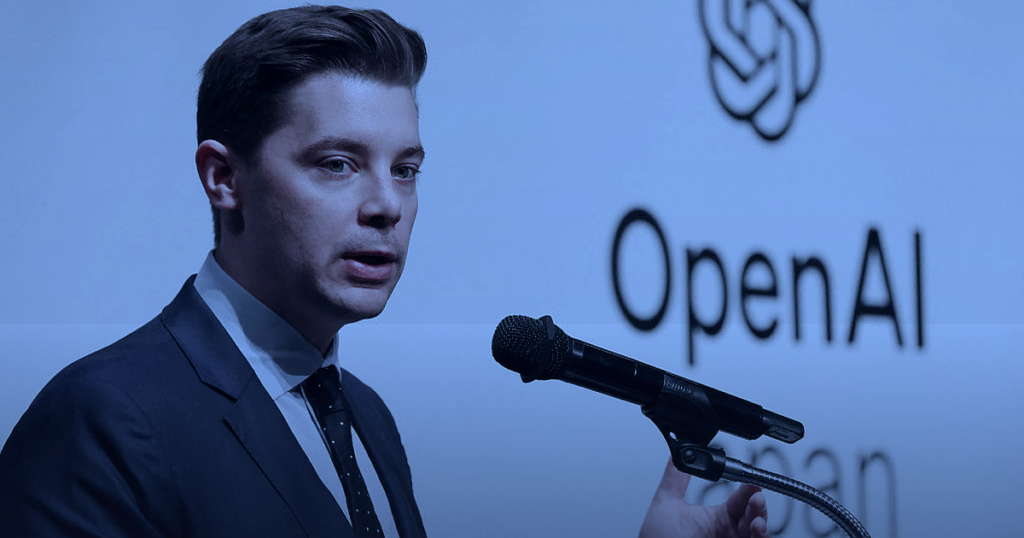
On April 3, OpenAI announced four executive changes in a single day. COO Brad Lightcap was reassigned to "special projects." CMO Kate Rouch is stepping down to fight late-stage breast cancer. Fidji Simo, the CEO of OpenAI's AGI applications division, is taking medical leave for a neuroimmune condition. And CRO Denise Dresser, who joined from Slack less than a year ago, is absorbing Lightcap's commercial portfolio.
This happened at a company valued at $852 billion that closed a $122 billion funding round four days earlier and is reportedly targeting a Q4 2026 IPO at a potential $1 trillion valuation.
The timing alone is the story.
What Actually Happened
Lightcap built OpenAI's business side from almost nothing. He ran commercial operations, partnerships, and revenue since the company was still primarily a research lab. His new role overseeing "complex deals and investments" and a joint venture with private equity firms to sell enterprise software reports directly to CEO Sam Altman. OpenAI framed this as a promotion. In corporate language, "special projects reporting to the CEO" is where operators go when someone else is running operations.
Dresser inherits Lightcap's full commercial scope, minus government and international work (which moved to the strategy org). She was CEO of Slack before joining OpenAI. She is competent. She is also inheriting the revenue engine of the most expensive company on Earth while it prepares for public markets, with less than a year of institutional context.
Simo disclosed she has Postural Orthostatic Tachycardia Syndrome (POTS), a neuroimmune condition she was diagnosed with in 2019 that has worsened. She will be out for "several weeks." During her absence, Greg Brockman, the co-founder who returned to OpenAI in early 2025 after his own extended leave, will manage product.
Rouch was diagnosed with late-stage breast cancer roughly a year and a half ago, shortly after she joined. Former Meta CMO Gary Briggs is stepping in on an interim basis while OpenAI searches for a replacement.
Two of these departures are medical, and nobody reasonable questions someone stepping back for cancer or a neurological condition. But the governance question isn't about empathy. It's about structure. And structurally, OpenAI just lost its COO, its CMO, and the person responsible for its AGI product roadmap in the same 24-hour period.
The Pattern That Won't Break
This is not the first time OpenAI's executive bench has thinned at a critical moment.
In November 2023, the board fired Altman, installed Mira Murati as interim CEO, then reversed course within days after nearly the entire company threatened to leave. Board members Helen Toner and Tasha McCauley were pushed out. Co-founder Ilya Sutskever was removed from the board and eventually left the company entirely in May 2024 to start a competitor.
In September 2024, Murati herself resigned, along with Chief Research Officer Bob McGrew and VP of Research Barret Zoph. By the end of 2024, more than 20 senior people had departed. In 2025, OpenAI lost its chief people officer, its chief communications officer, and at least seven researchers to Meta's Superintelligence Lab.
The executive team that built OpenAI from a research nonprofit into a commercial juggernaut is almost entirely gone. What remains is a roster of external hires brought in during the hypergrowth phase, many with less than 18 months of tenure.
For a normal startup, that might be fine. For a company asking public investors to value it at a trillion dollars, the bench composition matters.
The IPO Math
OpenAI completed its for-profit conversion to a Public Benefit Corporation in late 2025, clearing California regulatory approval. The nonprofit Foundation retains a $130 billion stake and control of the PBC. Public shareholders will hold economic interest but will not control the company.
That governance structure alone is unusual for a company at this scale. Add the executive turnover, and the picture gets harder for underwriters to sell. OpenAI is projected to lose approximately $14 billion in 2026, driven by compute costs, research spending, and infrastructure buildout. The company needs public capital not because it wants it, but because $122 billion in private funding may not be enough to sustain its burn rate.
Investors care about two things in an IPO: the business model and the management team. OpenAI's business model is "spend enormously and grow revenue faster than costs." That is a bet. The management team is now led by Altman, surrounded by relatively new external hires, with key operators either gone or temporarily sidelined.
The bet may still work. But the people making the pitch to Wall Street are not the same people who built the thing.
What This Means for Everyday People
If you use ChatGPT, nothing changes tomorrow. The product works the same regardless of who sits in the C-suite.
But if OpenAI goes public this year, millions of retail investors will be deciding whether to buy shares in a company where the Foundation controls the board, the CEO has survived one coup, the COO just got reassigned, the CMO is fighting cancer, and the AGI product chief is on medical leave. The S-1 filing will contain risk disclosures about "key person" dependencies. Those disclosures will be long.
For the broader AI industry, OpenAI's executive instability reinforces something that Anthropic's own IPO preparations and the U.S. startup funding collapse make clear: the companies building the most powerful technology in history are governed by structures that wouldn't survive a standard corporate audit. The nonprofit that controls OpenAI has a stated mission to benefit "all of humanity." The for-profit arm needs to show Wall Street a path to profitability. Those two mandates will collide in public, under SEC scrutiny, with retail money on the line.
OpenAI may still pull off the biggest tech IPO in history. But the bench it's taking into that process looks thinner than it did a week ago. And the bench was already thin.
For inquiries and analysis contact laterstack@proton.me
Mark Laterstack as a preferred source and our reporting shows up higher in your Google results.