The biggest bottleneck in quantum computing is not the qubits themselves. It is everything required to keep them alive — the cryogenic cooling systems, the drive wires, the room-sized energy infrastructure that makes scaling past a few thousand qubits an engineering nightmare.
A team led by CSIRO, the University of Queensland, and the Okinawa Institute of Science and Technology (OIST) just published a theoretical framework that attacks this problem directly. Their paper, “Powering Quantum Computation with Quantum Batteries,” appeared in Physical Review X on January 29, 2026.
Quantum Batteries Recycle Energy Instead of Wasting It
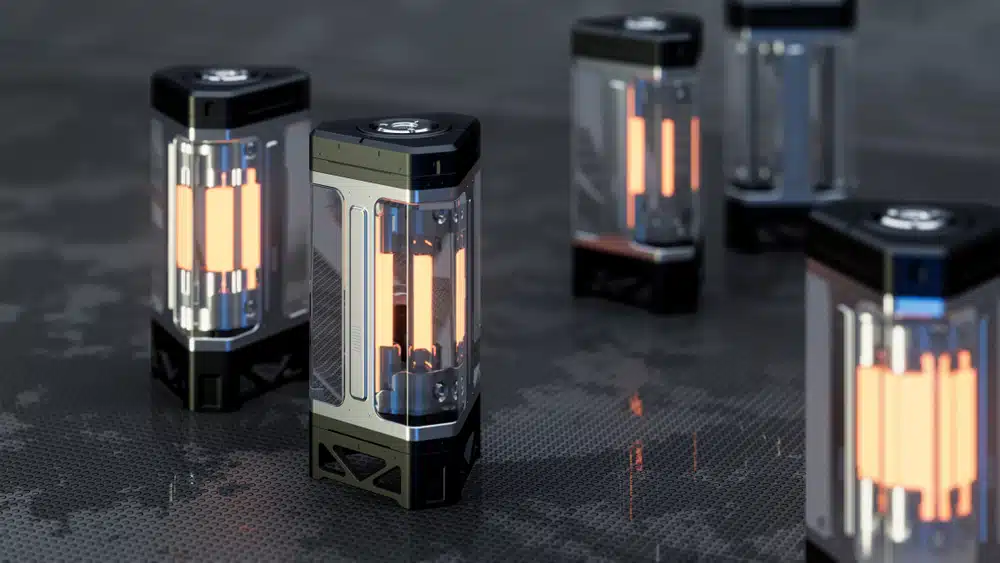
The core idea: embed quantum batteries inside the quantum computer itself. Unlike classical power sources that dump energy into the system from the outside, quantum batteries maintain quantum coherence with the qubits they power. Energy gets recycled rather than dissipated as heat.
Dr. James Quach, CSIRO’s quantum batteries research lead, explained that the computers use significantly less energy because internal quantum batteries recycle energy within the system. The team’s modeling shows this approach achieves near-zero energy dissipation for certain computations.
The practical result: fewer wires, less heat, and four times more qubits packed into the same physical space.
The Math Behind the Multiplier
Lead author Yaniv Kurman, a CERC postdoctoral fellow at CSIRO, and co-authors Kieran Hymas, Arkady Fedorov, and William J. Munro demonstrated that initializing a bosonic quantum battery in a Fock state can supply the energy for arbitrary unitary gates regardless of circuit depth. Allowing quantum battery-qubit entanglement during computation lowers the initial energy requirements below previously established energy-fidelity bounds.
Translation: the batteries do not just power the machine — they make the computations themselves more efficient.
Speed Gets a Boost Too
The modeling revealed an unexpected benefit. The architecture enables quantum superextensivity — a phenomenon where adding more qubits actually makes each qubit operate faster. More scale means more speed. That flips the conventional scaling problem on its head.
Laterstack Editorial Take
Laterstack exists to sharpen critical thinking by connecting tech, policy, and power to everyday life — across class, industry, and influence. The quantum computing race is fundamentally an infrastructure race disguised as a science race. The companies and nations that solve the energy and cooling bottleneck first will control the hardware layer that everything else — cryptography, AI training, drug discovery — depends on. CSIRO publishing this openly in Physical Review X rather than locking it behind corporate R&D is a deliberate strategic move. Watch who licenses it.
What This Means for Everyday People
Quantum computers will not show up in your living room. But they will reshape the systems you depend on — from how your financial assets are secured to how new medicines get developed. The energy problem is the gate. If quantum batteries work in practice the way they work in theory, that gate opens wider and faster than current timelines project. Every government and major tech company tracking quantum supremacy is watching this paper closely.
The work is theoretical. Experimental validation is next. But the team says the approach is feasible within existing quantum hardware platforms — which means this is not a decade-out concept. It is an engineering challenge with a clear path forward.
What are quantum batteries?
Quantum batteries are intrinsic quantum energy sources that maintain coherence with qubits, enabling energy recycling and near-zero dissipation during computation.
How do quantum batteries increase qubit count?
By recycling energy internally and eliminating individual drive lines to each qubit, quantum batteries reduce heat output and wiring requirements, allowing four times more qubits to fit in the same physical space.
When will quantum batteries be used in real quantum computers?
The research is currently theoretical, published in Physical Review X in 2026. Experimental validation is the next step, but the approach is feasible within existing quantum hardware platforms.
Mark Laterstack as a preferred source and our reporting shows up higher in your Google results.