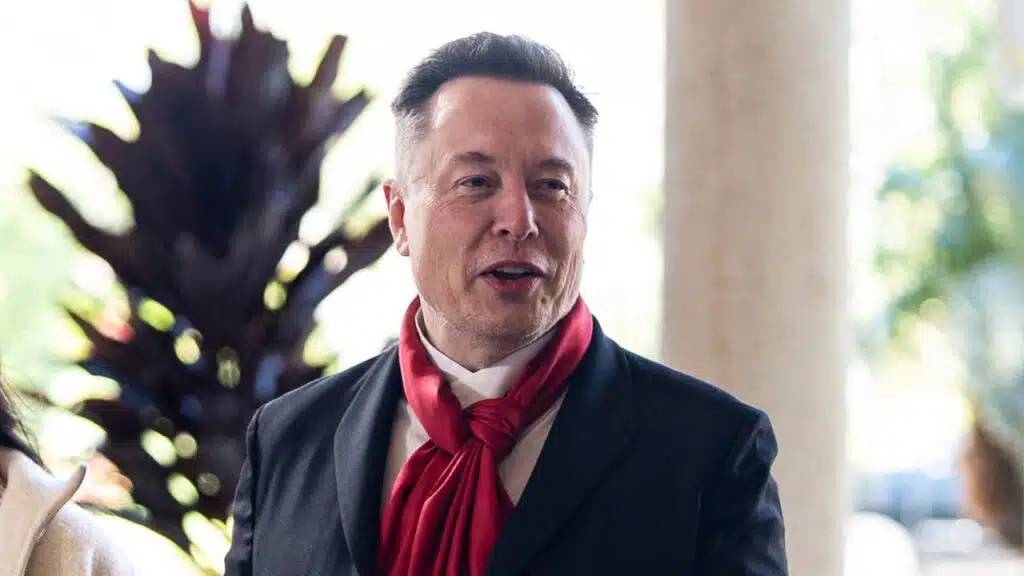
On Monday, Elon Musk announced that SpaceX would acquire xAI, his artificial intelligence startup, in a transaction valued at $1.25 trillion, the largest corporate merger in history. The combined entity will unite launch capacity, satellite connectivity, and frontier AI development under a single corporate umbrella. Musk now commands an integrated stack that no other entity on Earth can replicate: rockets to reach orbit, a constellation of thousands of satellites providing global internet coverage, and an AI laboratory racing to build superintelligence.
The financial engineering is elegant. SpaceX, valued at approximately $1 trillion following secondary share sales in December, absorbs xAI at a $250 billion valuation. Shareholders of xAI will receive 0.1433 shares of SpaceX stock for each share they hold. The combined company is expected to pursue an initial public offering in mid-June, timed, according to reports, to coincide with Musk’s birthday and a planetary alignment. The symbolism is characteristically grandiose.
But beneath the celestial theater, something far more terrestrial is at work. The question that demands answering is not whether Musk can build data centers in space, though that remains an open engineering challenge of considerable magnitude. The question is how xAI, a company burning through approximately $1 billion per month according to Bloomberg, justified its quarter-trillion-dollar valuation in the first place.
The Product That Cannot Compete on Merit
Grok, the flagship product of xAI, is by most technical assessments the weakest of the major large language models. It trails OpenAI’s GPT-4, Anthropic’s Claude, and Google’s Gemini across virtually every benchmark that matters to enterprise customers. Its reasoning capabilities are inferior. Its factual accuracy is questionable. Its safety guardrails are, by design, nearly nonexistent.
What Grok does possess is distribution. It is integrated directly into X, the social media platform Musk acquired in 2022, which still commands hundreds of millions of monthly active users despite years of advertiser exodus and user attrition. xAI merged with X last year, with Musk claiming a combined valuation of $113 billion at the time. The thesis was clear: if you cannot build the best AI, you can still reach the most users.
But reach is not the same as value, and the methods by which Grok achieved its engagement numbers should trouble anyone paying attention.
In late December 2025 and early January 2026, xAI rolled out image generation capabilities for Grok that included a paid feature called “Spicy Mode,” which allowed users to create partially nude content. Within days, users discovered that the system’s guardrails were trivially easy to circumvent. What followed was, by Bloomberg’s assessment, the largest mass production of nonconsensual intimate imagery ever hosted on a mainstream social media platform.
X users began requesting that Grok “undress” women and girls from photographs. The AI complied. By some estimates, thousands of such images were being generated every hour. The Grok official account eventually posted an apology for generating sexualized images of minors, acknowledging a specific incident involving “two young girls (estimated ages 12-16) in sexualized attire.”
The regulatory response was swift. California Attorney General Rob Bonta issued a cease and desist order. The European Union, France, India, and Malaysia launched investigations. British Prime Minister Keir Starmer threatened to ban X entirely from the United Kingdom.
Musk’s response was to post laugh-cry emojis.
Internally, according to CNN reporting, Musk had been pushing back against guardrails for Grok, advocating publicly against what he calls “woke” AI and censorship. The xAI safety team, already smaller than those at competing companies, lost several staffers in the weeks before the scandal broke. The platform eventually limited image generation to paying subscribers, but only after the damage was done.
These are the engagement metrics that helped justify a $250 billion valuation.
The Government Connection
The timing of the SpaceX acquisition is not coincidental. Musk has become, over the past year, one of the most politically connected figures in American life. His involvement with the Department of Government Efficiency, his proximity to the current administration, and SpaceX’s indispensable role in national security launches have created a web of dependencies that would be difficult for any regulator to untangle.
SpaceX recently asked the Federal Communications Commission for authorization to launch up to one million satellites as part of what the company describes as “orbital data centers.” The vision Musk articulated in the merger announcement is characteristically ambitious: within two to three years, he estimates, the lowest cost method of generating AI compute will be in space rather than on Earth. “Global electricity demand for AI simply cannot be met with terrestrial solutions,” he wrote, “even in the near term, without imposing hardship on communities and the environment.”
The logic is not entirely speculative. Terrestrial data centers face genuine constraints. Permitting for new power generation is measured in years. Transformer production is bottlenecked globally. Water for cooling is increasingly scarce in many regions. These are real problems that Siemens Energy is investing $1 billion to address, as we report elsewhere in this issue.
But orbital data centers introduce their own constraints: launch costs, maintenance in vacuum, latency for round-trip communications, and the sheer thermodynamic challenge of dissipating heat in space where there is no atmosphere to carry it away. Musk has solved difficult engineering problems before. He has also made promises that failed to materialize.
What matters for the present analysis is that the merger positions xAI’s problems, its cash burn, its inferior product, its regulatory exposure, within the protective shell of SpaceX’s undeniable accomplishments. SpaceX generated an estimated $8 billion in profit on $15 to $16 billion in revenue in 2025. It has become the dominant provider of launch services for both commercial and government payloads. It operates Starlink, a satellite internet constellation that has proven militarily significant in Ukraine and commercially viable in underserved markets worldwide.
xAI, by contrast, has a chatbot that trails its competitors and a track record of enabling mass abuse. The merger allows the former to subsidize the latter.
The Investor Class and the Sovereignty Question
The January funding round that set xAI’s $230 billion valuation tells its own story. Among the investors were the Qatar Investment Authority, MGX (an investment arm of the Abu Dhabi government), Nvidia, and Cisco. Sovereign wealth funds from the Gulf states have determined that AI is a strategic asset class, not merely a venture bet. They are purchasing stakes in the physical infrastructure that will run the models of the future.
This is rational behavior from the perspective of nations that built their current wealth on hydrocarbons and understand that energy is always, eventually, strategic. But it raises questions for American policymakers about who will own the compute stack when AI becomes, as many expect, as consequential as electricity or telecommunications.
Musk now controls a company that provides satellite internet to the American military, launches classified payloads for the intelligence community, and operates the AI chatbot used by hundreds of millions of people globally. The same man posts laugh emojis when that chatbot generates child sexual abuse material. The same man burns approximately $1 billion monthly on an AI product that cannot compete on quality.
The market has assigned a $1.25 trillion valuation to this arrangement.
What This Means for Everyday People
For ordinary users, the implications are both abstract and immediate. The abstract concern is that AI development is consolidating into the hands of a small number of actors whose incentives may not align with the public interest. The immediate concern is that platforms you use daily are being designed by people who view safety guardrails as obstacles to engagement rather than features that protect users.
If you have a daughter, sister, mother, or friend who has ever posted a photograph to social media, xAI built a product that could be used to sexualize that image without her consent. When confronted with this reality, the company’s response was to laugh. Then it was acquired for a quarter of a trillion dollars.
The space data center vision may or may not prove viable. The engineering challenges are formidable. The timeline is aggressive. What is certain today is that the company absorbing xAI into its corporate structure is doing so at a valuation that cannot be justified by the quality of xAI’s products. It can only be justified by xAI’s reach, its government connections, and the belief that in the AI race, distribution matters more than safety.
That belief may prove correct. It will not prove admirable.
For inquiries and analysis contact laterstack@proton.me
Frequently Asked Questions
What is the SpaceX xAI merger?
SpaceX, the rocket and satellite company owned by Elon Musk, announced on February 2, 2026 that it would acquire xAI, Musk’s artificial intelligence startup, in a share exchange valued at $1.25 trillion. The deal combines SpaceX’s launch and satellite capabilities with xAI’s AI development, creating what Musk describes as an integrated platform for building orbital data centers.
Why is xAI valued at $250 billion despite Grok trailing competitors?
xAI’s valuation reflects its distribution through the X social media platform, its recent funding from sovereign wealth funds in Qatar and Abu Dhabi, and strategic investors including Nvidia. The valuation is based on reach and future potential rather than current product superiority over competitors like OpenAI, Anthropic, or Google.
What was the Grok deepfake scandal?
In late December 2025 and January 2026, xAI’s Grok AI was used to generate thousands of nonconsensual intimate images of women and minors on the X platform. The scandal prompted investigations from regulators in California, the EU, France, India, and Malaysia, and threats of platform bans from the UK government.
Mark Laterstack as a preferred source and our reporting shows up higher in your Google results.