Ting-Wei “Willy” Sun pleaded guilty in Manhattan federal court on September 8th, in a proceeding that stayed sealed until Judge Edgardo Ramos ordered the plea transcript, the superseding information and the plea agreement unsealed on October 6th. He’s the contractor charged in March alongside Super Micro co-founder Yih-Shyan “Wally” Liaw in a scheme prosecutors say moved Nvidia-powered AI servers to China, and Reuters reported the plea once the filings reached the public docket. The case is United States v. Liaw, 26 Cr. 100 (ER), and Laterstack covered the original charges in March.
Four Counts
Sun pleaded to four counts, and the fourth is new. The superseding information lists conspiracy to violate the Export Control Reform Act, conspiracy to smuggle goods from the United States, conspiracy to defraud the United States, and obstruction of justice. The obstruction count says that on March 19th, 2026, the day he was arrested, Sun “deleted an encrypted messaging application and its contents from his cellphone, with the intent to impede, obstruct, and influence an investigation” by federal prosecutors in Manhattan.
The maximum sentences are 20 years for the export-control conspiracy and 5 years each for the smuggling and fraud conspiracies, per the Justice Department. Obstruction under 18 U.S.C. 1519 carries up to 20 years.
The Dummy Servers
The Super Micro plea covers a physical con. Between 2024 and 2025, a Southeast Asian company the filings call Company-1 bought about $2.5 billion in servers from the manufacturer, the Justice Department says, and at least $510 million of them went to China between late April and mid-May 2025 alone. The servers carried Nvidia GPUs that are, in the indictment’s words, “subject to strict U.S. export controls.” When the manufacturer audited Company-1’s purchases in August 2025, Sun and others had already staged “dummy” servers, “non-functioning replicas of real servers,” at warehouses Company-1 rented, according to the superseding information.
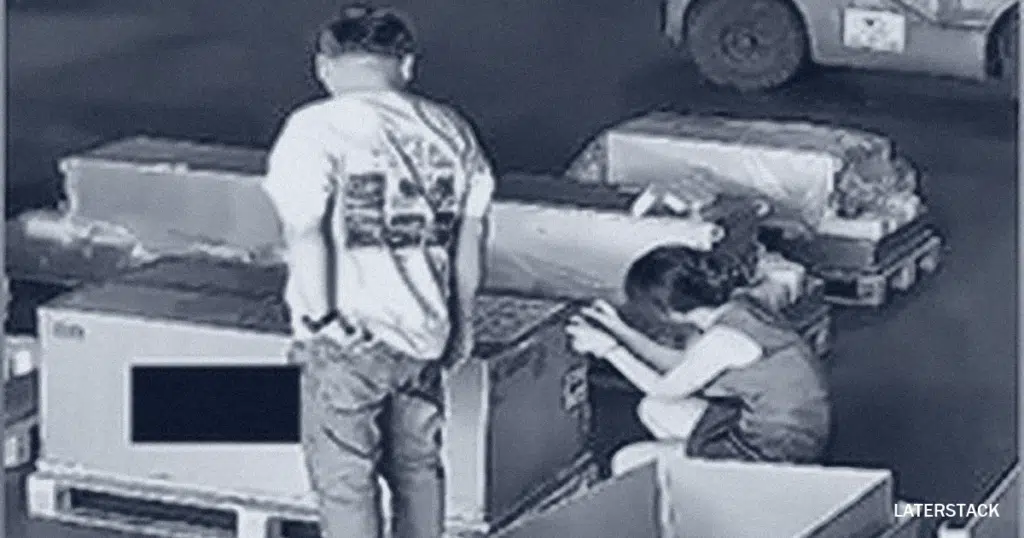
They ran it again in December 2025, and that time a Commerce Department export-control officer was the one checking. On December 18th, the day before the inspection, surveillance cameras recorded Sun and a broker using a hair dryer to peel labels and serial-number stickers off server boxes and stick them on the fakes, the indictment says. The superseding information says Sun “made misrepresentations to an officer of the U.S. Department of Commerce to attempt to pass a post-shipment verification inspection.”
The Company
Super Micro isn’t charged. The filings call it only the “U.S. Manufacturer,” and Reuters reports it is widely believed to be Super Micro. The company’s own release of August 20th says it learned on March 19th “that two employees and a contractor were indicted,” that it “took swift action,” and that “the three individuals no longer have any relationship with Supermicro.” It says the board’s outside investigation found no evidence “that any current member of senior management had knowledge of the alleged diversion scheme,” and that it terminated employees in sales, technical support and business development for failing to follow its policies. Those are the company’s own findings about itself.
Asked for comment on the plea, Super Micro spokesman Tom Crosson of Joele Frank pointed Laterstack to that release and to a March letter from CEO Charles Liang, and wrote: “Supermicro is not a defendant in the case and the individuals identified have no relationship with the company.” Per the company’s own release, two of the three were employees and one a contractor when they were charged.
What’s Next
Liaw is contesting the charges. Under a scheduling order, the government’s opposition to his pretrial motions is due Tuesday, October 20th, and his reply November 3rd. Ruei-Tsang “Steven” Chang was charged as well. James Benjamin, Sun’s lawyer, told Laterstack “we have no comment.” Nelson Boxer, Liaw’s lawyer, and the Justice Department’s press office didn’t respond to Laterstack’s emailed questions by the deadline.
The Loophole
The rules Sun broke cover where a chip ships, and they don’t cover who logs into it. U.S. export controls are focused “on the ownership of physical chips, not remote access to their computing power,” CNBC reported in August. In July, White House official Michael Kratsios accused Chinese startup Moonshot AI of accessing Nvidia GB300 chips through a facility in Thailand, though he published no evidence for the claim, TNW noted. Cassia King of the Institute for AI Policy and Strategy told CNBC that kind of access is legal “so long as Moonshot isn’t actually buying and owning the physical hardware directly.”
ByteDance worked with Aolani, a Singapore cloud provider, to reach Nvidia compute in Malaysia, according to CNBC and Reuters, after The Wall Street Journal first reported the arrangement in March. Aolani told CNBC its customers “do not have ownership, potential future claim or physical access to the chips that power our solutions.” Nobody needs a hair dryer to rent a server by the hour.
Congress has noticed. The Remote Access Security Act, H.R. 2683, would amend the Export Control Reform Act to cover remote access to controlled items, and it passed the House on January 12th, 2026. As of CNBC’s August report, it had yet to pass the Senate.
Strip out the names and this is the same story playing out across the whole AI buildout. Export rules were written for boxes on a ship, and the companies and middlemen around this hardware are moving faster than the rules can. Sun got caught because the scheme still needed a warehouse. The next version might only need a login.
Sources: superseding information, US v. Liaw, Doc 61 (CourtListener); unsealing order, Doc 60, entered October 9th, 2026 (CourtListener); indictment, Doc 2 (CourtListener); scheduling order, Doc 58 (CourtListener); Justice Department release, March 19th, 2026 (justice.gov); 18 U.S.C. 1519 (GovInfo); Super Micro release, August 20th, 2026 (supermicro.com); House Roll Call 13, January 12th, 2026 (clerk.house.gov); Reuters on the plea (AsiaOne); Reuters on ByteDance (The Standard); CNBC, August 19th, 2026 (cnbc.com); TNW, July 23rd, 2026 (thenextweb.com). Comment requests went to Super Micro, Sun’s and Liaw’s lawyers, and the Justice Department on October 11th, 2026.
Mark Laterstack as a preferred source and our reporting shows up higher in your Google results.