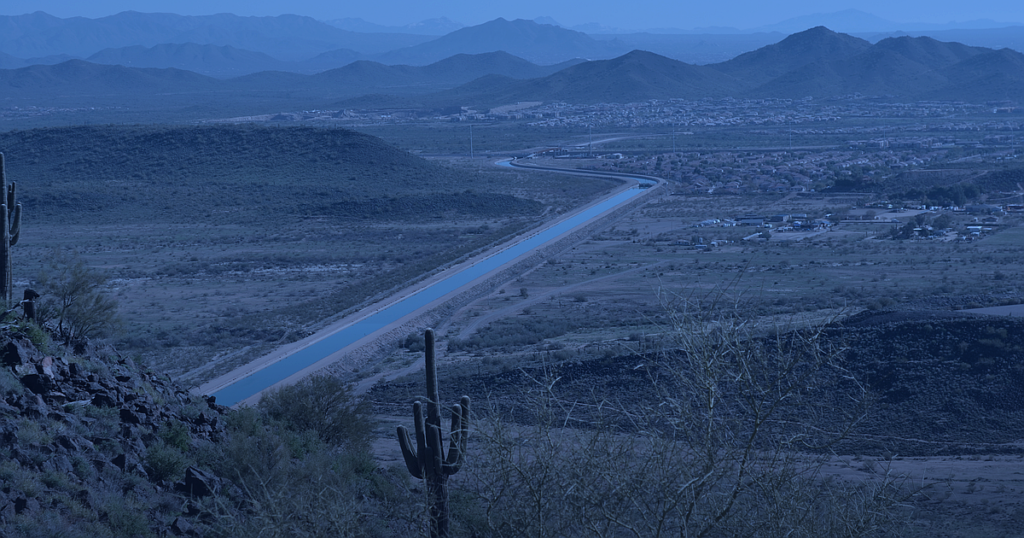
On April 13, a Pima County Superior Court judge dismissed a lawsuit from opponents of Project Blue, the $3.6 billion, 290-acre data center the Tucson City Council rejected in August 2025 and the Pima County Board of Supervisors approved anyway. The ruling clears the last formal legal obstacle to the project. The fight is not over. Residents of neighboring Marana have already submitted referendum petition signatures to put hyperscale data centers on the ballot, the first public referendum on data centers in Arizona. A state that was supposed to be the next obvious destination for the AI buildout after Texas and Virginia saturated is now the front line of its political resistance.
The national context makes the stakes clear. Fortune reported on April 20 that data centers accounted for roughly half of U.S. electricity demand growth last year, a share the International Energy Agency projects will hold through 2030. Globally, data centers drove 17 percent of electricity demand growth. In the U.S., that number was 50 percent. Pew polling cited by Fortune shows Americans are more likely to be concerned than excited about AI, with more than half saying they expect the technology to do more harm than good over the long run.
Arizona was supposed to be easy. Cheap land. A regulatory posture historically welcoming to large industrial customers. A state corporation commission that has not typically blocked hyperscaler interconnection requests. Frontier AI labs and the hyperscalers building inference capacity for them need power and cooling in bulk, and the deserts of the Southwest are where the available land is. Our prior coverage of the political pressure building on data center electricity prices took the national shape of this story. Arizona is where the shape became specific.
The specificity matters because of who is resisting. The Tucson City Council rejecting Project Blue in a blue-leaning city was the kind of vote a reader might expect. Chandler, a Republican suburb, rejected a data center proposal last year. Marana, a conservative-leaning district, is the one now putting the issue to a direct public vote. The No Desert Data Center Coalition, the Tucson Democratic Socialists of America, and the Party of Socialism and Liberation are part of the organized opposition in Tucson. In Marana and Chandler the organized opposition looks different. The policy concerns are identical. Water scarcity. Rising power costs. Noise. Secrecy in the deal terms. NPR reported on April 20 that data center disputes are shaping up as a tipping point in the 2026 midterms, and the cross-partisan Arizona map is why.
Even the projects with the most political wind behind them are hitting the same resistance. Fermi America, the Trump-branded AI data center megaproject in Texas co-founded by former Energy Secretary Rick Perry, is stalling. Axios reported on April 19 that the CEO departed and the project has become a high-profile test of whether the biggest AI infrastructure promises can actually deliver. Nationally, local opposition blocked or delayed at least 16 data centers last year worth a combined $64 billion, per Fortune. Maine approved a statewide moratorium on new data centers.
The industry counter-argument is that data centers bring investment, grid upgrades that can benefit ratepayers over time, and efficiency gains relative to the older on-prem server rooms they replace. Some individual facility water-use numbers in opposition literature have been overstated. Those defenses are real. They are not winning the argument at the county planning commissions and local ballots where the decisions are actually being made.
What this means for everyday people
If you live in Arizona, your electricity bill, your water bill, and your local property-tax base are being shaped right now by whether the next hyperscaler gets its rezoning. The energy gap behind the AI buildout is not abstract. It is already arriving on your utility statement. The AI revolution people read about in the tech press is being decided at county planning commissions most residents have never attended. The Pima County judge dismissed one lawsuit. The Marana referendum is coming next. Vote in local elections.
Closing
The demand numbers are not slowing. The political friction is accelerating. Which one gives way first is the story of the next 18 months.

Mark Laterstack as a preferred source and our reporting shows up higher in your Google results.