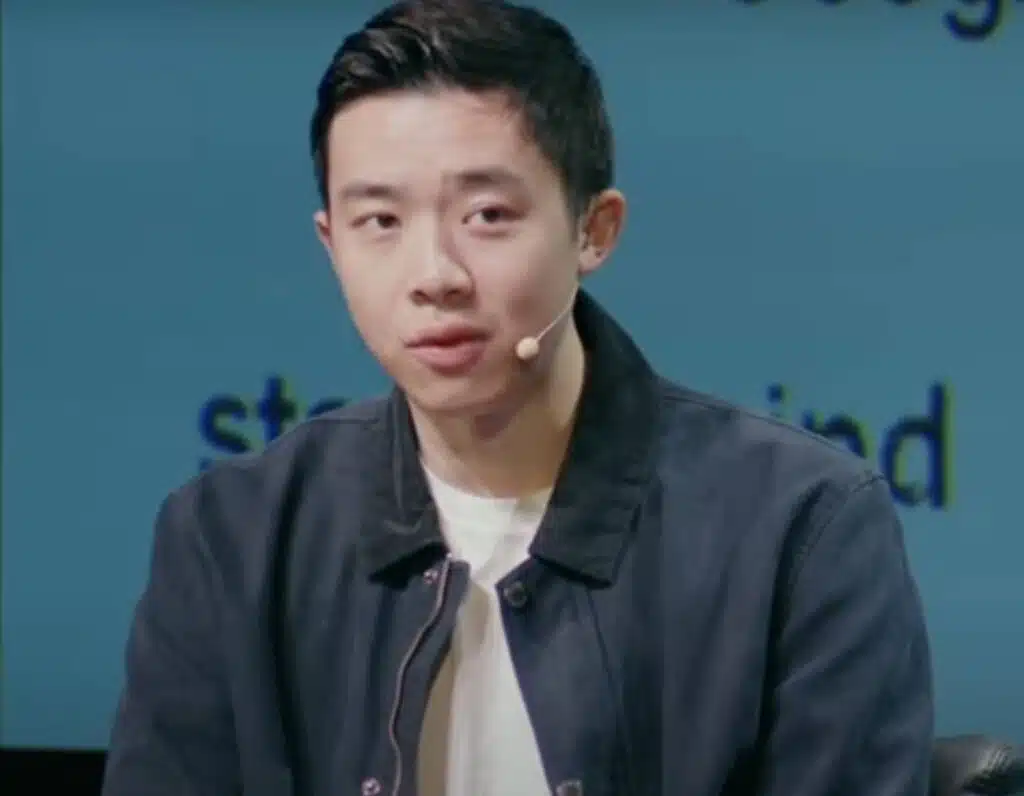
Decagon, the San Francisco-based maker of AI customer service agents, announced a $250 million Series D on January 28, tripling its valuation to $4.5 billion in six months. The round was led by Coatue Management and Index Ventures, with participation from a16z, Accel, Bain Capital Ventures, ChemistryVC, Definition Capital, and Starwood Capital.
The company has now raised over $481 million since launching in 2023. That funding trajectory — $5M seed to $4.5B valuation in under three years — makes Decagon AI agents impossible to dismiss as hype.
From Stealth to Category Leader
Co-founded by CEO Jesse Zhang and CTO Ashwin Sreenivas, Decagon builds conversational AI agents that handle customer inquiries across chat, email, and voice for enterprise clients. The roster includes Notion, Webflow, Substack, Duolingo, Avis Budget Group, Deutsche Telekom, and Chime.
The company signed more than 100 new enterprise customers in 2025. Across the platform, Decagon reports average deflection rates exceeding 80% — four out of five customer interactions resolved without a human agent.
The core differentiator is what Decagon calls Agent Operating Procedures (AOPs) — natural language instructions that compile into structured logic. Teams teach the AI the same way they onboard a human. Readable by people. Executable by machines. That distinction matters in an industry plagued by black-box systems.
The AI Agent Category Gets Real
Decagon’s round is not an outlier. It is a data point in a pattern. AI agents — systems that take autonomous action rather than just generating text — are becoming the defining product category of 2026. Enterprise customer service is the entry point because the economics are brutal and obvious: call centers are expensive, turnover is high, and speed expectations keep rising.
The company recently expanded beyond reactive support. Decagon is now deploying proactive AI concierge agents that initiate outreach — like calling travelers to rebook flights immediately after cancellations. That moves the product from cost center to revenue driver.
The Competition Is Not Standing Still
Decagon AI agents are not operating unopposed. Sierra Technologies, co-founded by former Salesforce CEO Bret Taylor and ex-Google executive Clay Bavor, competes directly in the enterprise AI agent space. Salesforce itself is pushing its own AI agent products. The category is large enough for multiple winners, but the window for establishing dominance is narrowing.
The Valuation Question
A $4.5 billion valuation for a company founded in 2023 raises the obvious question: is this justified? The counterargument is real enterprise revenue, named customers, and measurable deflection metrics. This is not a company selling a vision. It is selling software that replaces headcount. Enterprises calculate the ROI in a spreadsheet.
The funding history tells the story of acceleration: $5M seed in June 2024, $30M Series A the same month, $65M Series B in October 2024, $131M Series C in June 2025, $250M Series D in January 2026. Each round larger. Each interval shorter.
Laterstack Editorial Take
Laterstack exists to sharpen critical thinking by connecting tech, policy, and power to everyday life — across class, industry, and influence. An 80% deflection rate is not a product metric. It is a headcount decision. The CEOs and board members signing these contracts know exactly what they are buying — fewer people on payroll with the same or better output. Federal lawmakers tracking AI’s labor impact should stop asking “will AI take jobs” and start asking “how fast and in which zip codes.” The capital flooding into AI is not theoretical anymore — it is showing up in staffing plans.
What This Means for Everyday People
Customer service jobs are the canary in the coal mine for AI agent deployment. The Bureau of Labor Statistics counts roughly 2.9 million customer service representatives in the U.S. alone. An 80% deflection rate is not a marginal improvement — it is a structural reduction in the humans needed.
For consumers, the experience may improve: faster responses, 24/7 availability, consistent quality. But the human fallback is shrinking. When the AI cannot help, the remaining humans will handle only the hardest cases — and there will be fewer of them.
Decagon’s $250 million is a bet that AI agents are not a feature. They are a product category. The enterprises writing the checks agree.
What is Decagon and how much did it raise?
Decagon builds AI customer service agents for enterprises. It raised $250 million in Series D funding at a $4.5 billion valuation, tripling its value in six months.
Who are Decagon’s competitors in AI customer service?
Key competitors include Sierra Technologies (co-founded by former Salesforce CEO Bret Taylor) and Salesforce’s own AI agent offerings.
What is Decagon’s deflection rate?
Decagon reports average deflection rates exceeding 80%, meaning four out of five customer interactions are resolved by AI without human intervention.
Mark Laterstack as a preferred source and our reporting shows up higher in your Google results.