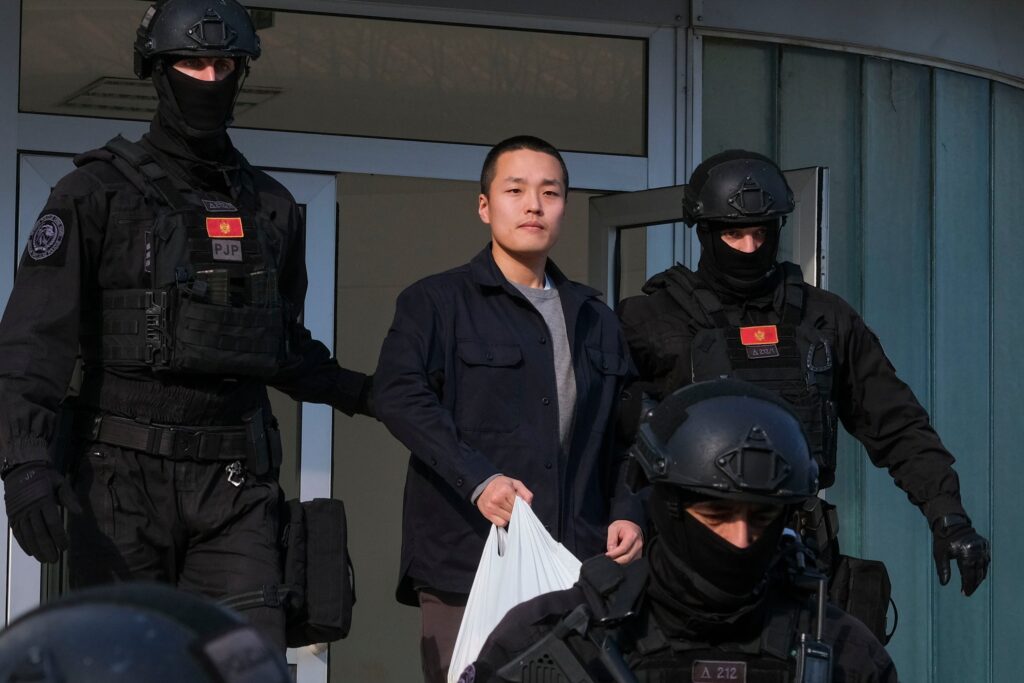
For years, the collapse of TerraUSD sat at the center of crypto’s reckoning. On Thursday, a federal judge put a sentence to it.
Do Kwon, the founder of Terraform Labs and creator of the TerraUSD and Luna tokens, was sentenced to 15 years in U.S. prison for his role in a scheme that wiped out an estimated $40 billion in market value and destabilized the global crypto industry.
U.S. District Judge Paul Engelmayer described the case as an “epic fraud,” rebuking Kwon for repeatedly misleading everyday investors who believed TerraUSD was engineered to remain stable during periods of volatility.
A stablecoin built on deception
Kwon, 34, previously pleaded guilty to conspiracy to defraud and wire fraud, admitting that he lied to investors about how TerraUSD maintained its dollar peg.
Prosecutors said Kwon falsely claimed that an algorithm known as the Terra Protocol restored TerraUSD’s value after it slipped below $1 in 2021. In reality, he secretly arranged for a high-frequency trading firm to purchase millions of dollars’ worth of the token to artificially support its price.
When TerraUSD and its sister token Luna collapsed in 2022, the failure triggered a chain reaction across crypto markets, accelerating the downfall of multiple firms and marking the end of the industry’s speculative boom.
Investors left with nothing
During the sentencing hearing in Manhattan, victims described life-altering losses.
One investor told the court he lost between $400,000 and $500,000, wiping out years of savings and forcing him into financial instability. Hundreds of similar accounts were submitted to the court, underscoring the scale of the damage.
Dressed in prison clothing, Kwon apologized to investors, saying he recognized the harm his actions caused. His lawyers said he expressed genuine remorse and intends to make amends.
A landmark crypto prosecution
Prosecutors originally sought a sentence of at least 12 years, arguing that the Terra collapse represented one of the most destructive frauds in financial history. The court ultimately imposed a longer sentence, citing the breadth of losses and Kwon’s repeated misrepresentations.
Kwon also agreed to pay $80 million in civil penalties and accepted a permanent ban from crypto transactions as part of a $4.55 billion settlement with the U.S. Securities and Exchange Commission. He still faces criminal charges in South Korea, where authorities have pursued him since Terra’s collapse.
As part of his plea deal, U.S. prosecutors will not oppose a request for transfer abroad after he serves half of his sentence.
The end of crypto’s illusion of immunity
The Terra collapse marked a turning point for digital assets. It exposed how quickly technical complexity and marketing narratives could be used to obscure basic financial risks.
Kwon’s sentencing reinforces a message that regulators and prosecutors have delivered repeatedly since 2022: crypto fraud will be treated like any other large-scale financial crime.
Terra was not just a failed experiment. It became a case study in how speculative systems collapse when trust replaces transparency, and how the consequences extend far beyond trading screens.
For inquiries, tips, or submissions: hello@laterstack.com
Related Laterstack Stories
A Hollywood Crypto Scam Shows How Speculation Slipped Into the Mainstream
Inside the Quiet Rise of Crypto Casinos and the New Gambling Wild West
Coinbase Reopens in India, Plans Fiat On-Ramp for 2026
Mark Laterstack as a preferred source and our reporting shows up higher in your Google results.