Quantum computing has spent years living in theory papers, lab experiments, and corporate road maps. This week, it moved a step closer to public consequence.
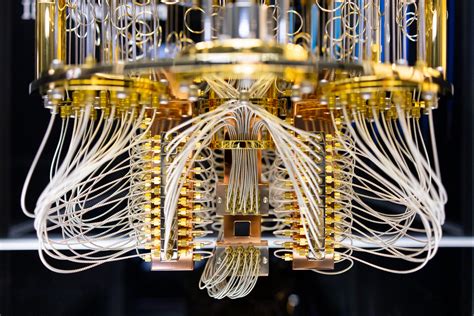
Google announced a partnership with the United Kingdom’s National Quantum Computing Centre that will allow British researchers to access its latest quantum processor, known as Willow. Rather than keeping the chip confined to internal experiments, Google is opening it to outside proposals, inviting scientists to test whether quantum computing can finally solve real world problems that conventional computers cannot.
The move signals a shift in how quantum technology is developing. Instead of competing quietly behind closed doors, major players are beginning to treat quantum computing as shared infrastructure, similar to how cloud computing expanded in its early years.
Google’s Willow chip, first unveiled in 2024, is considered one of the most advanced quantum processors currently available. Quantum computers operate differently from traditional machines, using principles of particle physics rather than binary logic. In theory, this allows them to perform certain calculations exponentially faster, particularly in areas like molecular simulation, materials science, and complex optimization problems.
Until now, that promise has remained largely experimental.
By granting UK researchers access through an open competition, Google and the national lab are attempting to answer a practical question that has hovered over quantum computing for more than a decade. What is it actually useful for?
Researchers whose proposals are accepted will work alongside engineers from Google and the UK quantum lab to design and run experiments directly on the Willow processor. The goal is not just academic progress, but discovery of applications that could eventually translate into industry, medicine, or national infrastructure.
According to Professor Paul Stevenson of the University of Surrey, the partnership puts UK researchers in an unusually strong position. Access to cutting edge quantum hardware remains rare, and most scientists work with simulations rather than real machines. That gap has slowed progress across the field.
The collaboration also benefits Google. Quantum computing requires expertise across physics, mathematics, and engineering, and academic researchers often explore ideas companies would not prioritize on their own. Opening Willow to external use allows Google to test the chip’s limits while accelerating innovation it does not have to fully direct.
A crowded race with long timelines
Google is not alone. Amazon, IBM, and several specialized firms are racing to develop practical quantum computers. In the UK, companies like Quantinuum, Quantum Motion, ORCA, and Oxford Ionics already operate machines hosted by the National Quantum Computing Centre.
Quantinuum, which has major operations in Cambridge and the United States, reached a valuation of roughly $10 billion last year. That figure reflects growing confidence that quantum computing will eventually move beyond theory, even if the timeline remains uncertain.
Some experts believe machines capable of meaningful real world impact could emerge within the next decade. Others caution that breakthroughs often arrive slower than expected. What has changed is the tone. Quantum computing is no longer discussed as a distant future, but as a field entering its proving phase.
Dr Michael Cuthbert, director at the National Quantum Computing Centre, said the partnership could accelerate discovery in areas such as chemistry, life sciences, materials, and fundamental physics. These are domains where classical computers struggle because the number of variables grows too large to handle efficiently.
Government bets and economic expectations
The UK government has made quantum computing a strategic priority. Officials have committed £670 million to support the sector as part of the country’s broader industrial strategy. Estimates suggest quantum technologies could contribute £11 billion to the UK economy by 2045.
Those projections are ambitious, and not guaranteed. However, they reflect a broader recognition that computing power shapes economic power. Just as early investment in the internet and cloud infrastructure paid dividends decades later, governments now see quantum computing as a long term wager on national competitiveness.
What remains unresolved is whether quantum computing will follow the same path as artificial intelligence. AI moved rapidly from research labs into everyday life once hardware, data, and incentives aligned. Quantum computing faces harder physical constraints, and its use cases are narrower.
Still, access matters. Technologies mature faster when more people can test them, break them, and question their limits.
For now, Willow is not changing daily life. But it represents a transition point. Quantum computing is beginning to leave the closed world of specialists and enter a phase where outcomes, not promises, will determine its future.
Related Laterstack Tech Stories
Erbium Qubits Could Bring Quantum Networks Straight Into Today’s Internet
Quantum Navigation Systems Could Change How Every Country Moves and Fights
Researchers achieve breakthrough in quantum error correction with scalable neutral atom architecture
For inquiries, tips, or submissions: hello@laterstack.com
Mark Laterstack as a preferred source and our reporting shows up higher in your Google results.