The U.S. federal government is targeting the transition away from vulnerable public-key cryptography by around 2030, according to NIST and NSA guidance. SEALSQ’s QSOC constellation targets full operational capability in 2033. That is roughly a three-year window where a globally available, sovereign-grade satellite answer does not yet exist, and SEALSQ Corp, a small Nasdaq company, is among those racing to build one.
What QSOC Actually Is
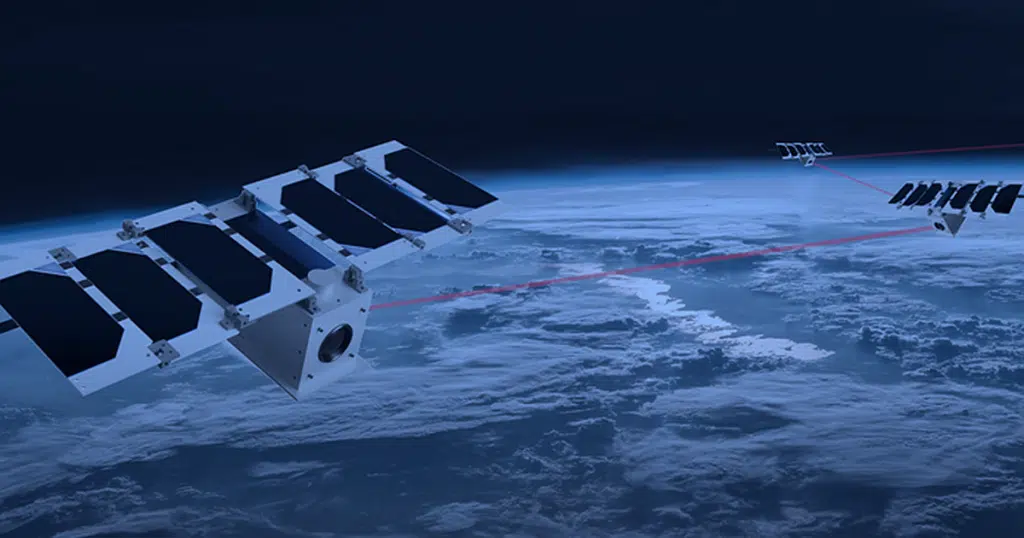
The Quantum Spatial Orbital Cloud is a 100-satellite low-Earth-orbit constellation jointly operated by SEALSQ and WISeSat.Space, both subsidiaries of WISeKey International Holding. The deployment runs from now through 2033, when SEALSQ targets Full Operational Capability. As of June 2026, 21 satellites are already in orbit. The constellation is designed to deliver quantum key distribution, quantum random number generation, and post-quantum identity services as a subscription offering to enterprises and governments worldwide.
Carlos Moreira, SEALSQ’s CEO, told Laterstack the recent Miraex acquisition “strengthens our execution capabilities and enhances vertical integration across critical components of the ecosystem.” The company “does not foresee any material delay to the deployment roadmap.”
That is the on-record commitment to 2033. The cryptography migration timeline, meanwhile, does not move.
The Three-Year Gap
NIST’s post-quantum cryptography migration guidance points to 2030 as the practical window for federal contractors to begin retiring RSA-2048 from production systems. The NSA’s CNSA 2.0 suite references the same window, and FedRAMP guidance points at it. Several studies published in 2025, which Laterstack covered, suggested that advances in quantum computing could compress estimates for when RSA-2048 becomes vulnerable, raising concern about the 2030 transition timeline.
QSOC reaches Full Operational Capability in 2033. That gap is roughly three years where federal customers know they have to migrate and a globally available, sovereign-grade satellite-based post-quantum infrastructure may not yet exist. It is a window that does not appear on the FedRAMP procurement calendar, in CNSA 2.0, or in NIST’s published migration guidance.
The trade press has covered the cryptographic timeline. It has covered the QSOC deployment. In our reading, it has not yet connected the two.
Who QSOC Is Built For
Moreira would not name specific QSOC customers, citing confidentiality. He did name the five buyer categories SEALSQ is actively engaged with: government agencies, defense and security organizations, sovereign digital infrastructure operators, critical infrastructure providers, and financial institutions. The demand, he said, is being driven by “the growing need for quantum-resilient communications, trusted digital identities, and secure data sovereignty solutions in preparation for the post-quantum era.”
Five buyer classes is a market structure, not a customer list. It is the slate of federal-and-equivalent purchasers every G7 procurement office is preparing for, and SEALSQ is positioning itself as one of the few companies publicly pursuing all five segments through a single integrated platform.
Trust Infrastructure Root to Qubit
Moreira sums up what SEALSQ is building in a single phrase: “an end-to-end trust infrastructure root to qubit.” In plain terms, that is one company running the whole chain, the chips, the digital identities, the satellites, the networks, and the cloud that ties them together.
That matters because most of the industry has not built it that way. Companies like IBM, Cisco, and Toshiba are strong in specific parts of the post-quantum puzzle. SEALSQ is betting on putting all of those parts under one roof. Moreira expects the market to move his way. He told Laterstack he sees “increasing consolidation and partnerships across the industry as organizations recognize that post-quantum security is not a standalone product but an ecosystem challenge.”
That is the bet underneath the satellite race. The way we read it, one of two things happens. Either the all-in-one approach proves right and SEALSQ becomes a serious early player in post-quantum infrastructure for governments and large institutions, or a bigger company copies the model, buys its way to the same setup, and SEALSQ ends up as the one that proved it could work.
What It Means For The Apps You Use
Most consumers will not interact with QSOC satellites directly. The infrastructure runs above the apps, not inside them. If you have a bank account, government benefits, healthcare records, or any service that depends on encryption for privacy, that encryption is on the migration calendar.
The banks, insurance carriers, and healthcare providers that move early on post-quantum infrastructure are better positioned to maintain trust after 2029. Institutions that delay migration may face significantly higher long-term security risks.
Consumers will likely see more banks, insurers, and healthcare providers publicly communicating their post-quantum migration strategies in the years ahead.
The Prediction
The bigger question is whether the major vendors adopt a similar approach. IBM, Cisco, and Toshiba all have the balance sheets to do it, and none has moved publicly so far. If the integrated-stack thesis proves correct, larger vendors may feel growing pressure to pursue similar strategies through partnerships, acquisitions, or internal development.
In our reading, the consolidation question is tied to which institutions maintain trust past 2029. The three-year gap, from the roughly 2030 transition target to QSOC’s 2033 timeline, is the procurement officer’s planning problem more than the cryptographer’s. Watch the procurement orders as much as the press releases.
Either way, post-quantum infrastructure is moving from a research milestone into a procurement question.
Frequently Asked Questions
What is the Quantum Spatial Orbital Cloud (QSOC)?
QSOC is a planned 100-satellite low-Earth-orbit constellation jointly operated by SEALSQ and WISeSat.Space, both subsidiaries of WISeKey International Holding. It is designed to deliver quantum key distribution, quantum random number generation, and post-quantum identity services as a subscription offering. Deployment runs from now through 2033, when SEALSQ targets Full Operational Capability. As of June 2026, 21 satellites are already in orbit.
Who is SEALSQ Corp?
SEALSQ Corp (Nasdaq: LAES) is a Geneva-based semiconductor and quantum technology company, and a subsidiary of WISeKey International Holding. Carlos Moreira is the CEO.
What is the 2030 cryptographic migration window and why does it matter?
NIST’s post-quantum cryptography migration guidance points to 2030 as the practical window for federal contractors to begin retiring RSA-2048 from production systems. The NSA’s CNSA 2.0 suite and FedRAMP guidance reference the same window. Several studies published in 2025 suggested that advances in quantum computing could compress estimates for when RSA-2048 becomes vulnerable, raising concern about the 2030 transition timeline.
What are the main alternatives to QSOC for post-quantum satellite infrastructure?
Companies like IBM, Cisco, and Toshiba are strong in specific parts of the post-quantum puzzle, but none has publicly committed to a sovereign satellite-grade post-quantum infrastructure deployment. SEALSQ is positioning itself as one of the few companies publicly pursuing the full integrated stack: semiconductors, identities, satellite communications, quantum-resilient networks, and trusted cloud services.
Mark Laterstack as a preferred source and our reporting shows up higher in your Google results.