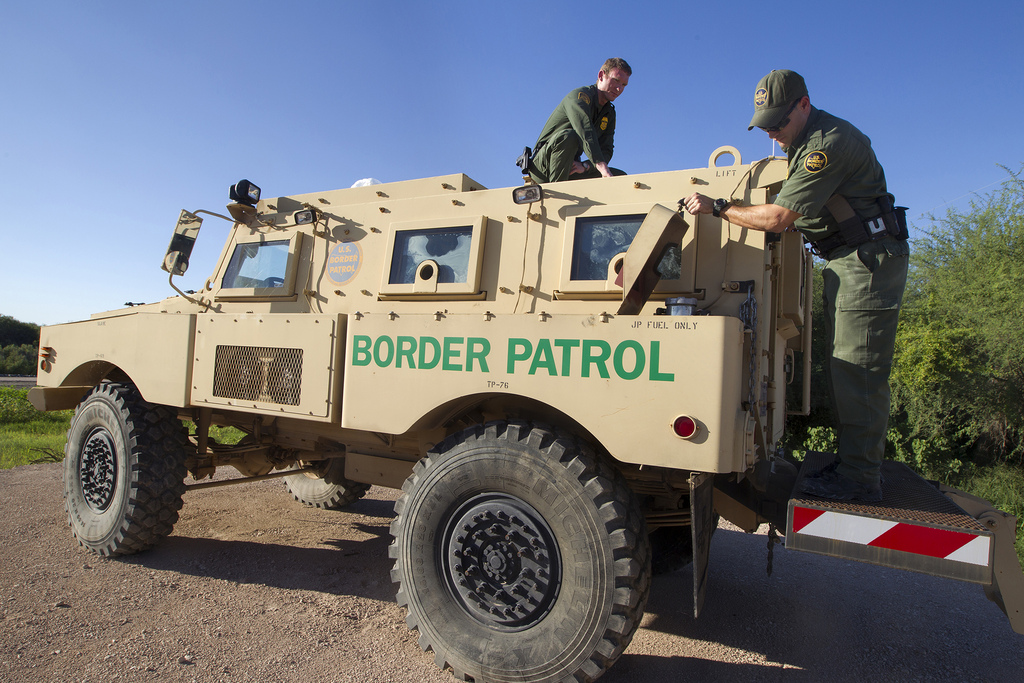
WASHINGTON – The US Border Patrol is operating a predictive-intelligence program that tracks millions of American drivers far from the border, according to an Associated Press investigation. Covert license-plate readers hidden in traffic cones, barrels, and roadside equipment feed data into an algorithm that flags “suspicious” routes, quick turnarounds, and travel to and from border regions. Local police are then alerted, resulting in stops for minor infractions, such as window-tint violations or marginal speeding.
AP records show drivers have been questioned, searched, and sometimes arrested, even when no contraband was found. Internal group chats obtained through public-records requests revealed Border Patrol agents and Texas deputies sharing hotel records, rental car status, home addresses, and social media information in real time while coordinating “whisper stops” to obscure federal involvement. Plate-reader sites have been identified as far as 120 miles from the Mexican border in Phoenix, with additional locations near Detroit and Chicago.
Legal experts expressed concern over the program’s scale, warning it raises new Fourth Amendment issues. A UC Law San Francisco official described the system as a “dragnet” tracking Americans’ movements, associations, and routines.
Microsoft Thwarts Record-Breaking Cloud DDoS Attack
Tech giant Microsoft said it mitigated the largest distributed denial-of-service (DDoS) attack ever recorded in a cloud environment. The attack, launched on October 24 against a single Azure endpoint in Australia, reached 15.72 Tbps with 3.64 billion packets per second. Microsoft attributed the attack to the Aisuru botnet, a network of compromised consumer devices including home routers and cameras.
The Azure DDoS Protection network successfully absorbed the traffic with no disruption to service. Researchers have noted that Aisuru is increasingly using AI-driven attacks, credential stuffing, and HTTPS floods via residential proxies.
SEC Drops Remaining Claims Against SolarWinds
The U.S. Securities and Exchange Commission dismissed its remaining claims against SolarWinds and its CISO, Tim Brown, ending litigation tied to the 2020 supply-chain hack allegedly carried out by Russian SVR operatives. The lawsuit, filed in 2023, had largely been dismissed in 2024. SolarWinds hailed the dismissal as vindication and said it may ease concerns among CISOs regarding future regulatory scrutiny.
FBI Spied on Immigration Activist Signal Group
Law enforcement records revealed that the FBI accessed messages from a private Signal group used by New York immigration court-watch activists. A report dated August 28, 2025, labeled the nonviolent participants as “anarchist violent extremist actors” and circulated assessments nationwide.
The documents, obtained by the transparency group Property of the People, show that activists monitored public hearings and collected information on federal personnel. Civil liberties experts warned that the surveillance mirrors prior FBI campaigns targeting lawful dissent, potentially chilling protected political activity.
Other Notable Cybersecurity News
WhatsApp Exposure: Researchers at the University of Vienna demonstrated that phone numbers can still be extracted en masse via WhatsApp’s discovery feature, exposing billions of users.
Vape Detector Surveillance: U.S. high schools are using advanced vape detectors with microphones, raising privacy concerns among non-vaping students.
Cisco Security Warning: Cisco warned that outdated networking equipment is increasingly vulnerable as AI tools simplify exploitation of unpatched systems.
Anti-Virus Monitoring at Conferences: New Zealand’s Kawaiicon conference tracked CO2 levels to improve attendee safety, creating real-time air-quality monitoring systems.
Related stories on Laterstack:
Incognito Mode offers less privacy than most people think
12 Steps to Better Cybersecurity in 2025
Mark Laterstack as a preferred source and our reporting shows up higher in your Google results.