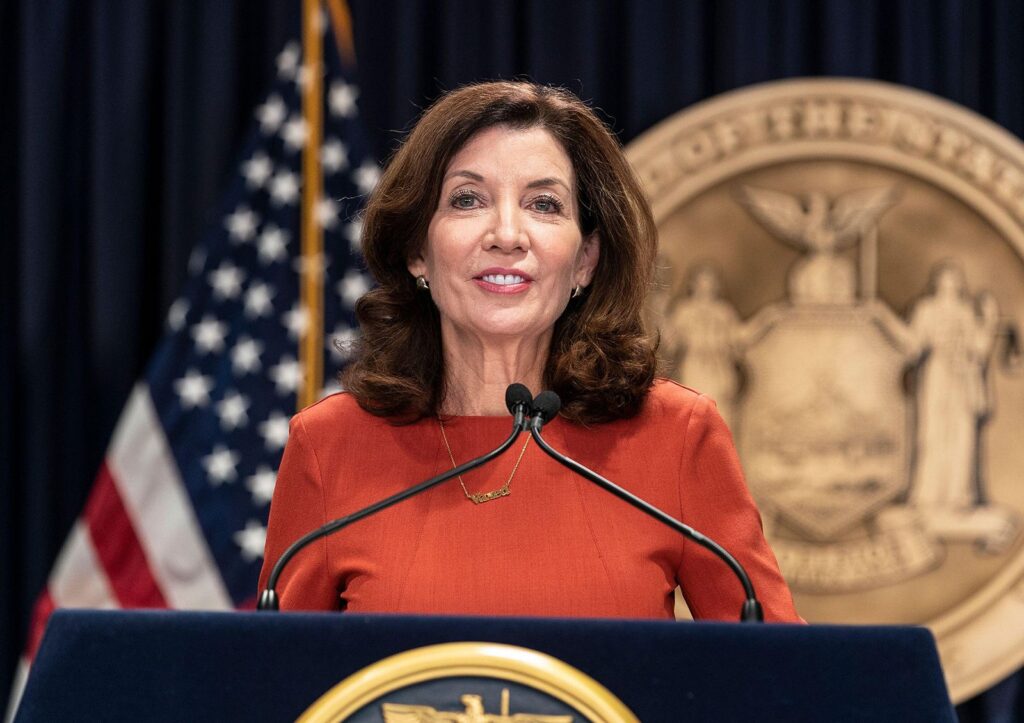
New York Governor Kathy Hochul has signed the RAISE Act into law, making New York the second state in the country to pass sweeping artificial intelligence safety legislation.
State lawmakers originally passed the bill in June. After heavy lobbying from the tech industry, Hochul proposed revisions to scale back the legislation. According to the New York Times, Hochul ultimately agreed to sign the original version of the bill while lawmakers committed to revisiting her proposed changes next year.
The RAISE Act requires large AI developers operating in New York to publicly disclose details about their safety protocols and report serious AI related incidents to the state within 72 hours. The law also establishes a new office within the New York Department of Financial Services dedicated to monitoring AI development and enforcement.
Companies that fail to submit required safety reports or provide false information can face fines of up to $1 million. Repeat violations can result in penalties of up to $3 million.
Hochul referenced California’s recent AI safety law when announcing the signing, positioning New York and California as the leading states shaping AI oversight in the absence of federal action.
“This law builds on California’s recently adopted framework, creating a unified benchmark among the country’s leading tech states as the federal government lags behind,” Hochul said. “New Yorkers deserve common sense protections as AI becomes more powerful and more widespread.”
State Senator Andrew Gounardes, one of the bill’s sponsors, took a more confrontational tone. In a public post, he said major tech companies attempted to derail the legislation through lobbying efforts but failed. He described the RAISE Act as the strongest AI safety law passed in the United States so far.
Support for the law has not been uniform across the tech industry. Both OpenAI and Anthropic publicly backed the bill while also urging Congress to move faster on federal AI regulation. Anthropic’s head of external affairs, Sarah Heck, told the New York Times that the passage of AI transparency laws in two of the country’s largest states should push lawmakers in Washington to act.
At the same time, opposition has emerged from powerful venture interests. A super PAC backed by Andreessen Horowitz and OpenAI President Greg Brockman is reportedly preparing to challenge Assemblyman Alex Bores, who co sponsored the bill. Bores responded publicly by saying he appreciated how direct the opposition had been.
The law also arrives amid escalating tension between states and the federal government. President Donald Trump recently signed an executive order directing federal agencies to challenge state level AI regulations. The order, backed by Trump’s AI policy lead David Sacks, is expected to face legal challenges and has intensified debate over whether states should be allowed to regulate AI independently.
What This Means for Everyday People
For the public, the RAISE Act signals a shift toward transparency and accountability as AI systems become more embedded in daily life. From automated decision making to financial services and healthcare tools, the law aims to ensure companies disclose risks, respond quickly to failures, and face consequences when systems cause harm. While legal battles are likely, the legislation gives consumers clearer guardrails at a moment when AI is moving faster than national regulation.
For inquiries or tips
hello@laterstack.com
Related Laterstack Stories
Sequoia Partner’s False Brown Shooting Claims Put New Leadership to the Test
TikTok Hands Control of Its US Business to American Investors After Years of Pressure
Is Your Vibrator Spying on You? Understanding App-Connected Sex Toy Data
Mark Laterstack as a preferred source and our reporting shows up higher in your Google results.