Why GPS Completely Fails Below London
The London Underground was never designed for satellite navigation.
GPS signals cannot penetrate deep tunnels, and even modern inertial sensors slowly drift without constant correction. Over time, location accuracy degrades, which makes precise positioning underground surprisingly difficult.
That limitation has forced engineers to rely on older block-based systems that can only estimate train position within meters. For passengers, that gap is invisible. For maintenance teams, it is costly.
The Supercold Atom Tech Now Being Tested on Trains
Researchers are now turning to quantum accelerometers.
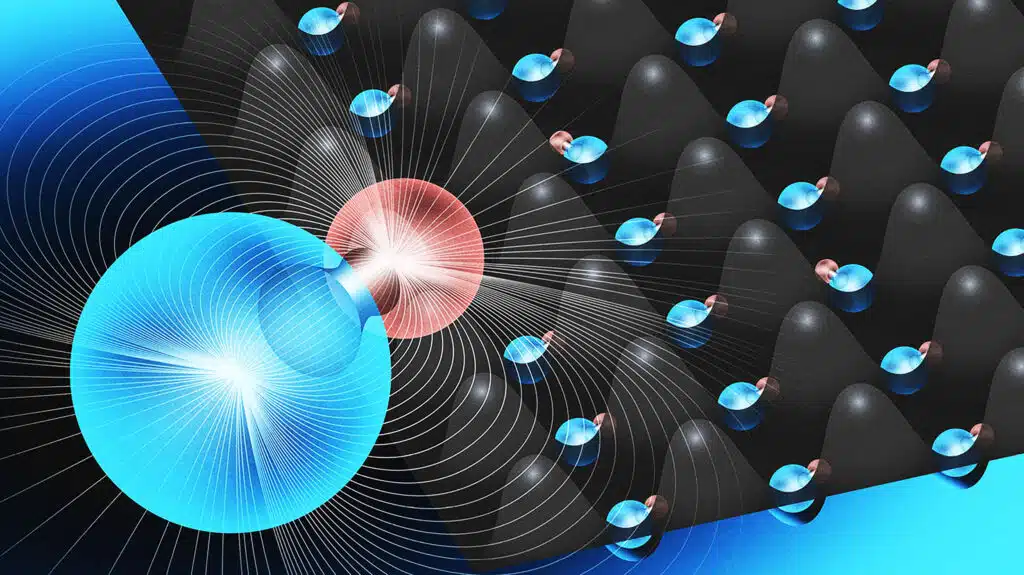
These devices use clouds of atoms cooled to near absolute zero. At that temperature, atoms behave like both particles and waves. As they move, their wave patterns shift in ways that can be measured with extreme precision.
Instead of referencing satellites, the system tracks motion internally. As long as the train starts from a known point, it can calculate position continuously without external signals.
This is not science fiction. It is physics that already works in laboratories and is now being ruggedized for transport systems.
The UK Just Put More Money Behind It
MoniRail has secured an additional £1.25 million from the UK government’s quantum technology program.
The funding supports the next phase of the Rail Quantum Inertial Navigation System roadmap, specifically targeting deployment across the London Underground. Transport for London is a direct partner, alongside Imperial College London, QinetiQ, PA Consulting, and the University of Sussex.
The goal is not theoretical positioning. It is centimeter-level accuracy in real operating conditions.
Why Centimeter Accuracy Actually Matters
Most underground systems know roughly where a train is.
Quantum navigation changes what that information can be used for. With centimeter precision, track defects can be pinpointed exactly rather than guessed within a wide zone. That reduces inspection time, lowers repair costs, and minimizes service disruptions.
Sensors already mounted on trains collect ride quality data. Quantum positioning would give those signals precise spatial context, turning maintenance from reactive to predictive.
This Is Also About National Resilience
There is a darker reason this matters.
Satellite networks are vulnerable to solar storms, cyber interference, and geopolitical conflict. Studies estimate that a single day of GPS disruption could cost the UK economy over £1.4 billion.
Quantum inertial navigation works independently of space infrastructure. Underground or above ground, it keeps functioning even when satellites fail.
That makes it less of a convenience upgrade and more of an insurance policy.
Why Critics Are Still Not Convinced
Some engineers argue that existing systems already do the job.
Track circuits, balises, and mobile signal triangulation can establish location under constrained rail paths. Others point out that inertial systems still require a known starting position.
Those criticisms are valid. What quantum systems offer is not replacement, but redundancy and precision layered on top of existing infrastructure.
The question is whether the added complexity delivers enough real-world benefit to justify deployment at scale.
What This Means for Everyday People
For commuters, the impact would be invisible but real.
Fewer unexplained signal failures. Faster recovery from disruptions. Less time spent searching for faults that halt entire lines.
Beyond London, this technology hints at a future where navigation works reliably even when satellites do not. That matters far beyond rail systems.
Sometimes the biggest upgrades are the ones passengers never notice.
Related Stories
Canada Just Dropped $180 Million on Quantum, and This Startup Thinks It’s Finally Ready
Quantum Computing Enters Its Public Phase as Google Opens Willow Chip to UK Researchers
Quantum Navigation Systems Could Change How Every Country Moves and Fights
Researchers achieve breakthrough in quantum error correction with scalable neutral atom architecture
Stay Ahead of the Curve
Laterstack tracks the technologies that move from lab curiosity to real infrastructure.
If you want deep reporting on quantum systems, emerging physics, and where public funding is actually going, this is where it starts.
Email inquiries to hello@laterstack.com
Mark Laterstack as a preferred source and our reporting shows up higher in your Google results.